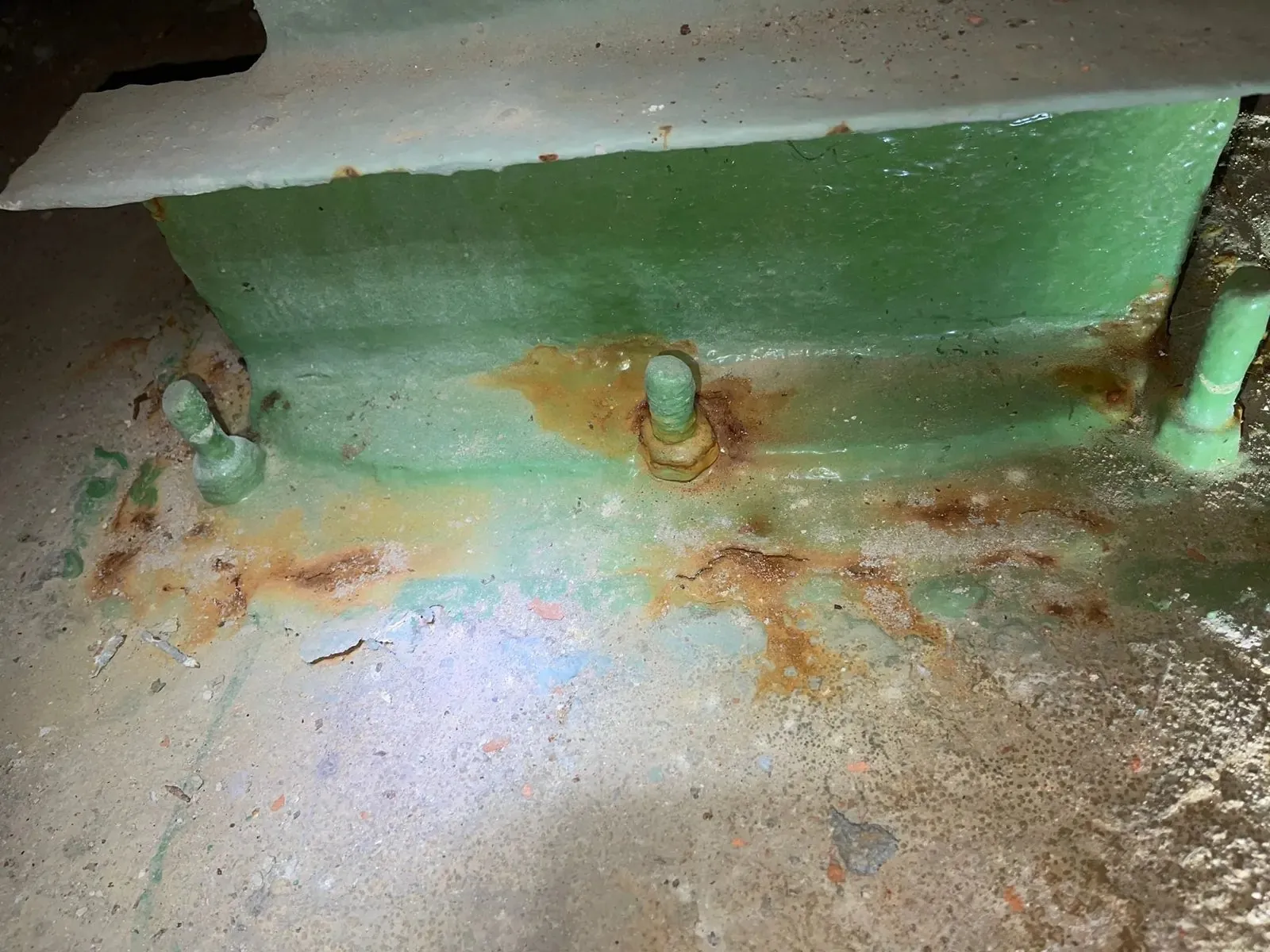
Rust by the sea: what we found beneath a seafront building
On the coast, rust makes no noise. It works slowly, in the dark and almost always where nobody is looking: in a basement, in a ventilated crawl space, behind the cladding of a column or under the edge of a terrace. By the time you can finally see it from outside, it has usually been advancing for years.
In this article we describe a real case we know first-hand: a residential building from the late seventies, a few metres from the sea on the Alicante coast, with more than a hundred steel columns resting on base plates inside a ventilated crawl space. Out of respect for the owners' association we won't name it. What we will tell you is what was found, why the previous repairs didn't last and how to carry out a technical inspection that actually helps you make a decision.
Why the sea eats steel
Steel rusts with water and oxygen. By the sea there is a third ingredient that speeds everything up: the chlorides in salt. The wind carries them inland as an aerosol and they settle on every surface. There they attract moisture, break down the layers that protect the metal and make corrosion advance through pitting, in depth, rather than more or less evenly.
The standard that classifies how aggressive an environment is (UNE-EN ISO 9223) puts it in numbers. Bare steel in a C4 coastal environment loses 50 to 80 microns of thickness in the first year. In C5, 80 to 200. In a dry inland town, just a few.
Something similar happens in concrete structures, though more hidden. Concrete protects the reinforcement as long as it stays alkaline and no chlorides reach it. That is why the Código Estructural (Spanish structural code) treats above-ground structures generally located less than 5 km from the coast as a marine environment (class XS1) and requires more cover and denser concrete. A building from the seventies was not designed to those requirements.
And one detail explains why rust ends up breaking things: it takes up much more space than the steel it comes from.
The case: a crawl space right by the beach
The building is U-shaped, with three entrances and between twelve and sixteen storeys. Below the ground floor there is a suspended ground floor (forjado sanitario): a void about 80 cm high (65 in places) that separates the building from the ground. Down there are the base plates of the steel columns, the beams and joists, and also the building's downpipes and drainage pipes.
It is a perfect place for corrosion: salty air, little ventilation, condensation, total darkness and, as was later confirmed, water from leaks dripping for years. It is also a place nobody goes into except to work, so the deterioration advanced unseen.
It's a familiar story: you repair what you can see, you paint it, after a while the rust comes back, you try another product… and so on for years. In the 2024 inspection the same plates were compared with the 2019 photos, and in 2024 there were clearly more corrosion points. The repairs weren't badly done; the problem was that nobody had cut off the cause.
What a useful technical inspection looks like
A technical inspection isn't walking around and saying “this looks bad”. To be able to decide, and to compare in five years' time, you need to leave a record. In this case there were three visits, one per area, and in each one:
- The crawl space was lit. With a torch you can see one plate; to work you need proper light. For the later works, temporary lighting of at least 300 lux was specified throughout the crawl space.
- Every column was numbered and each plate was photographed separately, with the number in view. That way every photo can be located on the plan and compared with the next inspection.
- The dust was cleaned off the plates before assessing them. A layer of dirt hides a pit perfectly.
- Each plate was graded, from 1 to 4, using written criteria (we'll look at them shortly).
- Everything was transferred to a plan in colours: green, yellow, orange and red. On the same plan, the damp areas and the leaking downpipes were marked.
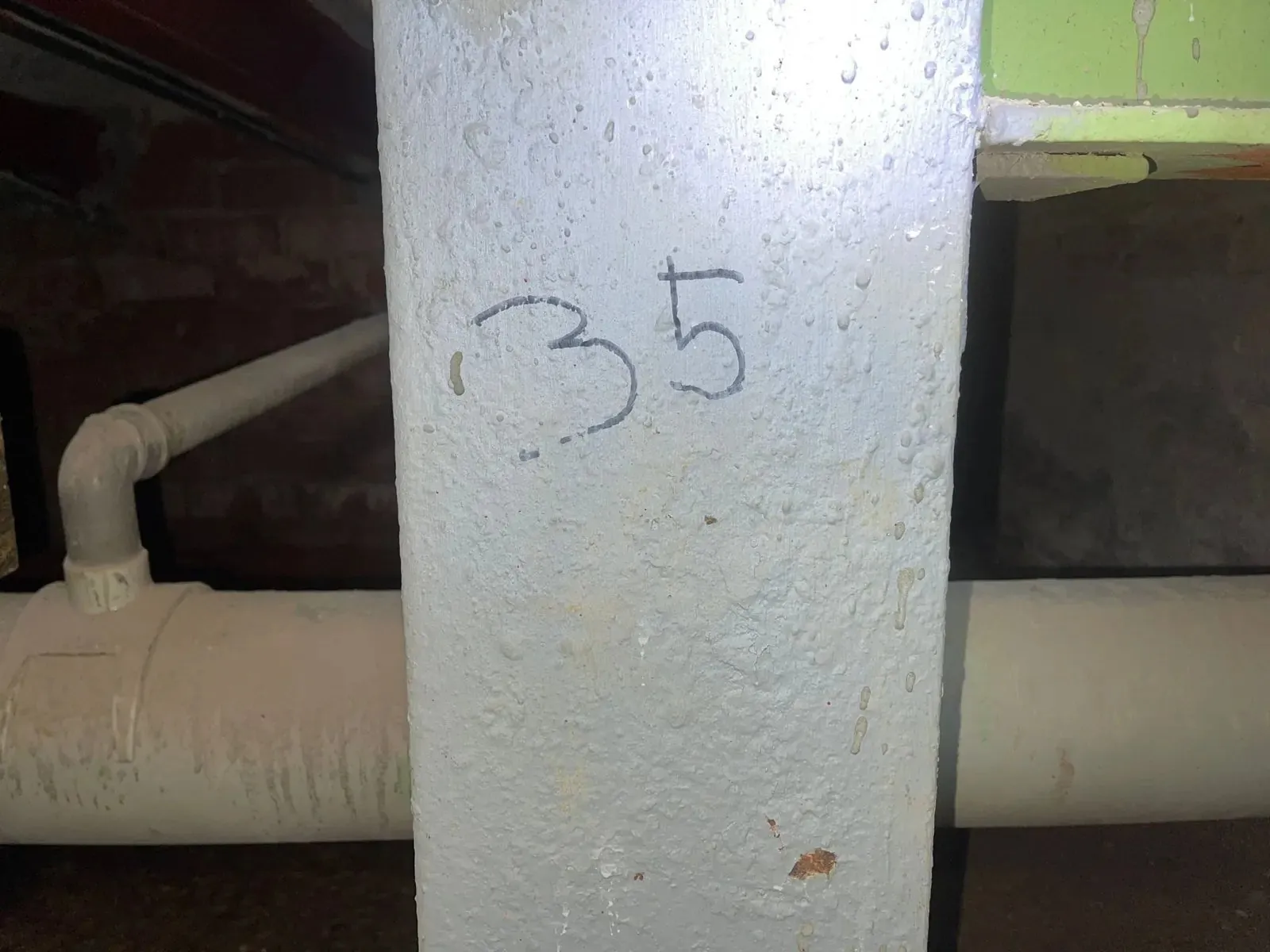
The result was a plan that showed, at a glance, that the worst-preserved plates were not randomly spread: they matched the damp areas caused by plumbing and drainage leaks, the areas most exposed to the marine environment, and the poorly ventilated corners with condensation.
Reading rust: four grades
Not all rust is equally serious, and not all of it needs the same repair. The scale used is simple and works for almost any metal element:
| Grade | What you see | What to do |
|---|---|---|
| 1 · Very minor | Some edges with slight corrosion, very isolated pitting. The plate is fine. | Monitoring. No short-term action needed. |
| 2 · Minor | Isolated pitting, rust on edges, nuts or bolts, not widespread. Paint peeling in places. | Repair the protection before it spreads. If left, it moves to grade 3. |
| 3 · Moderate or severe | Widespread pitting, corrosion at edges and anchors, blistered paint with rust underneath in several areas. | Thorough cleaning back to bare metal and a full protection system. |
| 4 · Very serious | Loss of section in the plate, stiffeners, bolts or sections. Loss of structural function. | Urgent: prop, replace the lost material and protect. |
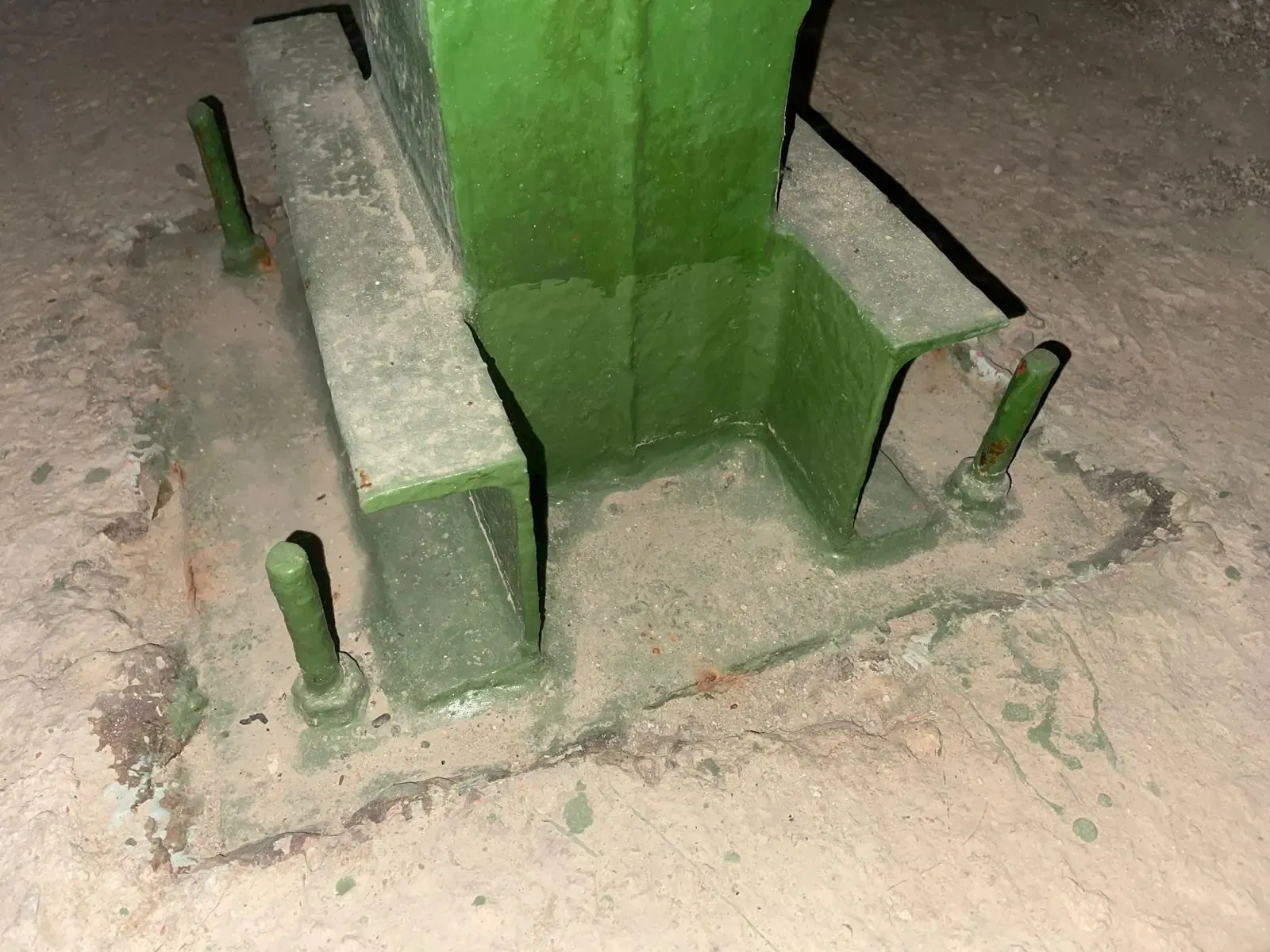
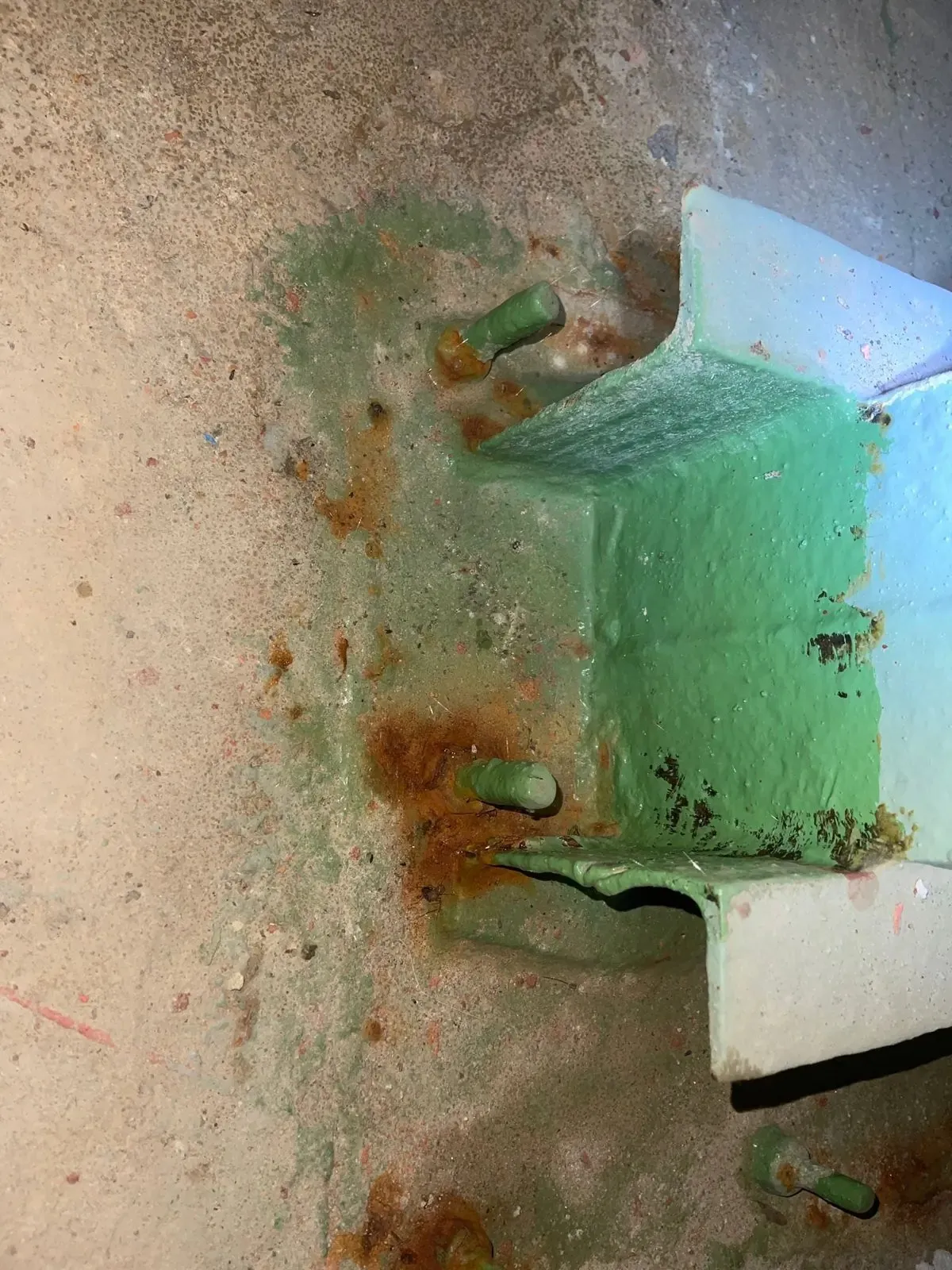
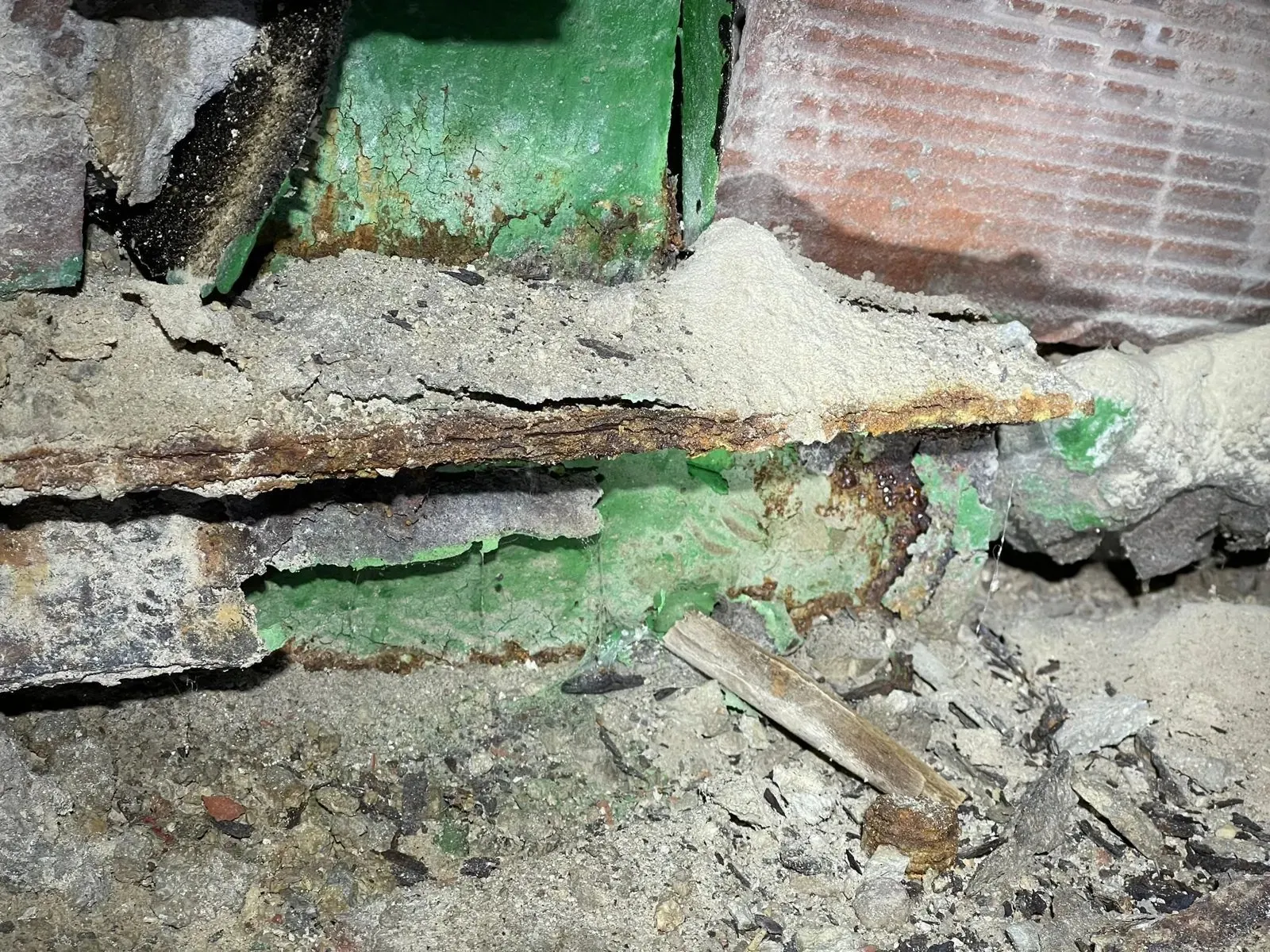
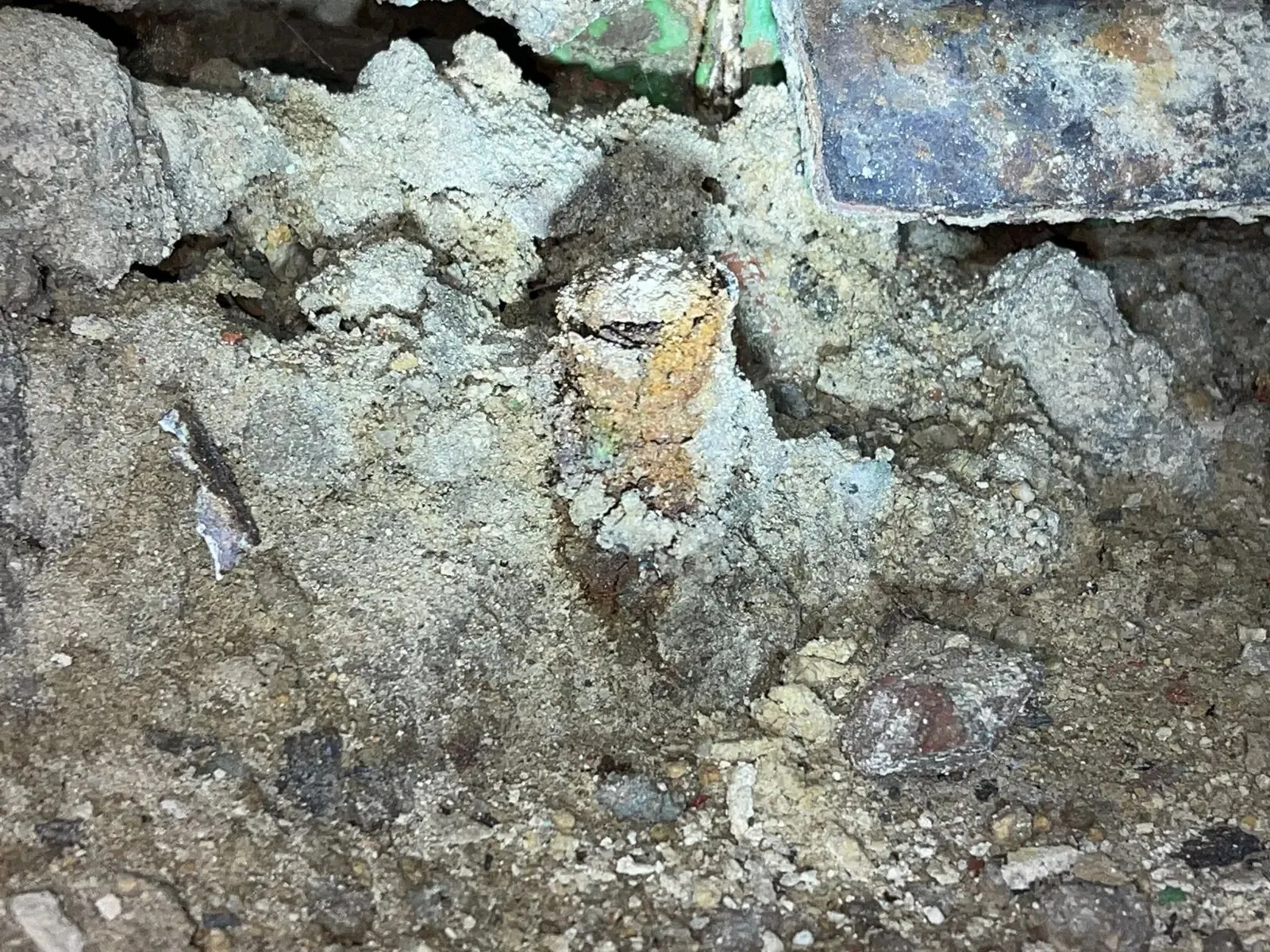
Grades 1 to 3 are a maintenance problem. Grade 4 is already a structural problem: there were beams whose section was flaking away in layers, and a column support where the sections that spread the load had lost material.
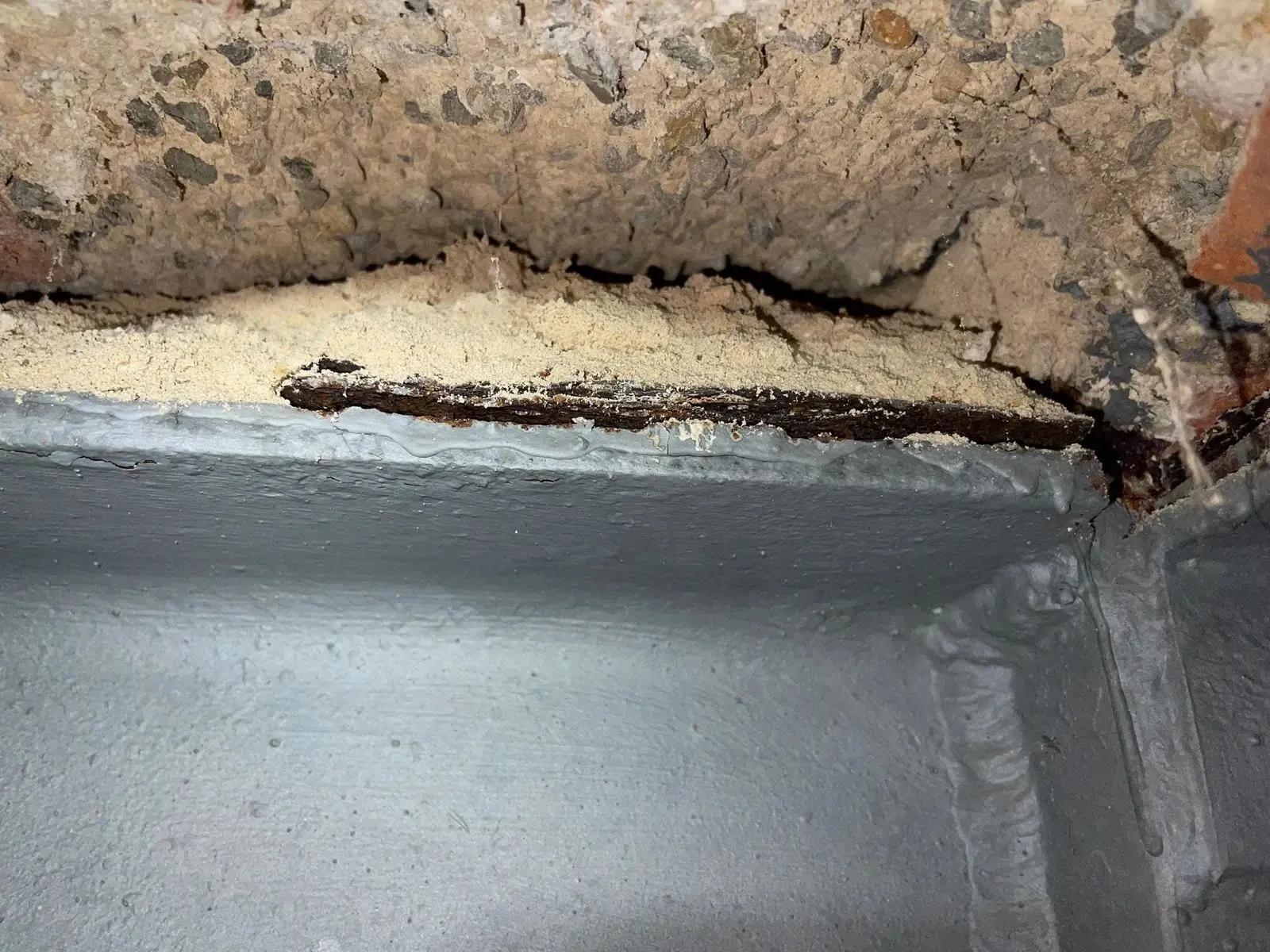
The lesson: if you don't stop the water, you'll be repainting every few years
This is the most important conclusion from the case, and it applies to almost any building: paint protects against the environment, but not against water dripping onto it. A downpipe leaking onto a plate for years will corrode it, however good the product.
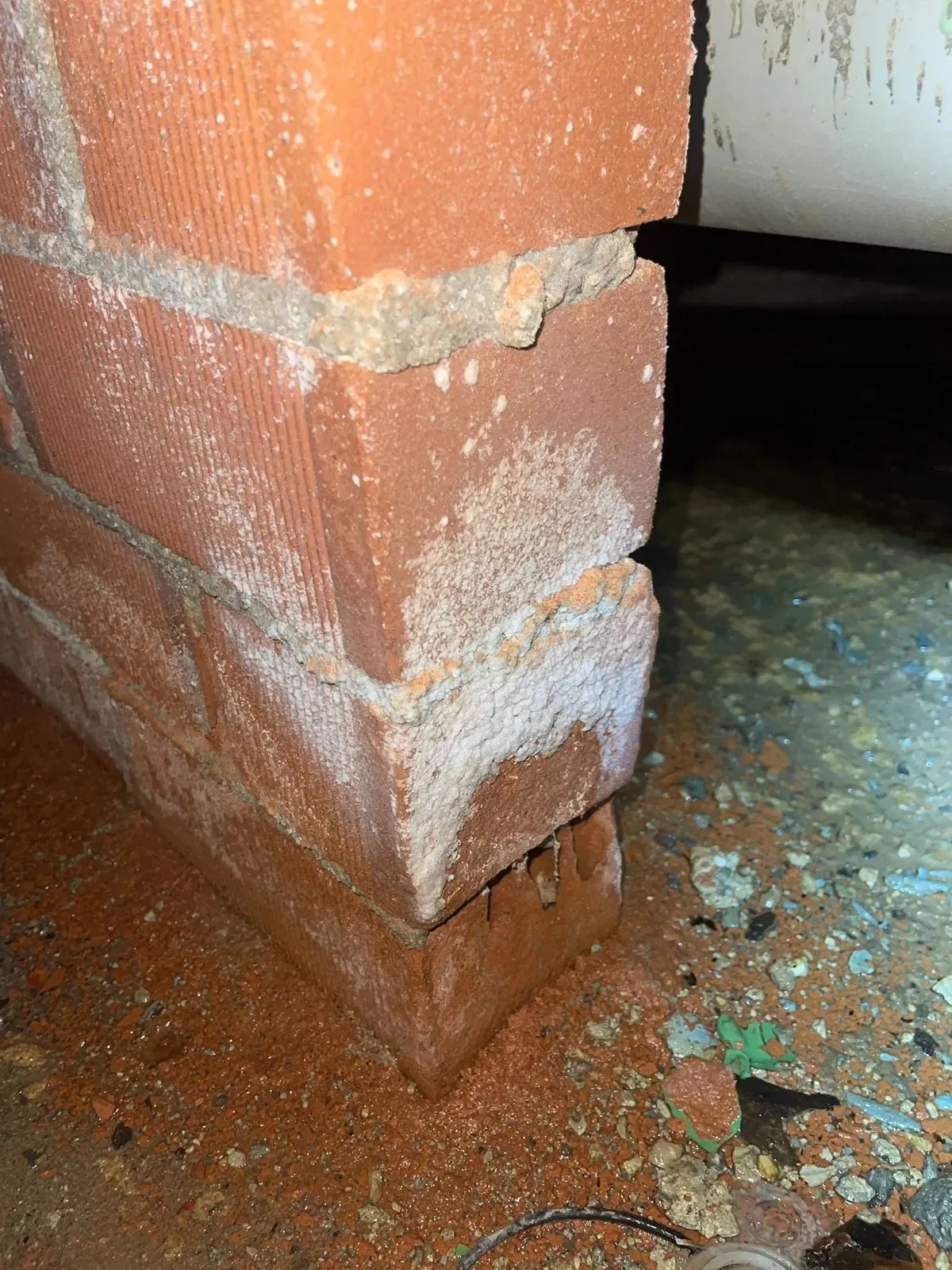
Two ways of preparing the steel in the 2019 repairs were also compared, with the same paint system: mechanical sanding and sandblasting. Both showed rust again, but the sandblasted plates held up better. It makes sense: paint grips clean, roughened steel, not the rust left in the pores.
Repairing without a diagnosis means paying twice. In this building, the right order was water first and steel second, and for years it was done the other way round.
How to repair it properly
Once the diagnosis was done, the repair project was fairly clear. In short:
First, stop the water
All the downpipe and pipe leaks marked on the plan were located and repaired, replacing the damaged lengths. Without this, everything else is temporary.
Then, measure
Before deciding anything, measure the remaining thickness of each element: plate, stiffeners, bolts, nuts and sections. The criterion was simple: if more than 20% of the section has been lost, the element is replaced; if not, it is cleaned and protected.
Grades 1 to 3: clean back to bare metal and protect
- Surface preparation to UNE-EN ISO 8501-1: sandblasting to grade Sa 2½ (preferably Sa 3, white metal), or mechanical brushing to St 3 where blasting isn't possible. Free of dust and grease, and dry.
- Three-coat paint system for a C4 environment (UNE-EN ISO 12944): a zinc-rich primer, a high-build epoxy intermediate coat and a topcoat, around 240 microns in total. Designed for highdurability, which in that standard means between 15 and 25 years.
- Edges and corners: these are where paint ends up thinnest and where rust gets back in. The concrete was broken out about 2 cm around the plate, sanded back to metal, the edge rounded off, painted and closed up again with R4 repair mortar.
Grade 4: prop, replace and protect
- Prop the surrounding area and load the props gradually, without sudden movements.
- Cut out the material that has lost section and fit new elements with the same characteristics.
- Check the welds: if rust has eaten into part of the bead, it must be built back up to a sufficient throat thickness (generally no less than 3 mm).
- Replace the nuts on bolts that have lost section or, if that isn't possible, encase them in a steel sleeve welded by qualified staff.
- And, finally, the same protection system as for the previous grades.
And don't forget
The repair doesn't end with the works. In an environment like this you need to check again every few years with the same plan and the same numbering, and touch up in time anything that starts to fail. Repainting an edge is far cheaper than replacing a stiffener.
Warning signs in your building
You don't need to go down into a crawl space to be suspicious. If you live near the sea, these are the signs that justify a technical inspection:
- Rust stains “weeping” from a column, a beam, the edge of a balcony or the edge of a floor slab.
- Straight cracks in concrete that follow the line of a reinforcing bar, or pieces of concrete falling off and leaving the bar exposed.
- Column finishes (cladding, render) bulging or cracking vertically.
- Paint on metal elements lifting in flakes with rust underneath.
- Damp, puddles or salt deposits in basements, garages and crawl spaces; leaking downpipes.
- Railings, anchors or bolts with their base swollen with rust.
None of these signs on its own means the building is in danger. It means it needs to be looked at with judgement, measured and decided on.
What you get from a technical inspection
A good technical inspection doesn't end with “it needs fixing”. It ends with documents you can use to decide at the owners' meeting, get comparable quotes and, if needed, apply for grants:
- A report with photos of each defect, located and numbered.
- A defect plan showing the severity of each point and the damp areas.
- A diagnosis of the cause, not just the symptom.
- A list of priorities: what is urgent, what can wait and what needs monitoring.
- A rough itemised budget and, if the works require it, the repair project.
In addition, in the Valencian Community residential buildings more than 50 years old must have the Building Assessment Report (Informe de Evaluación del Edificio) (IEEV.CV), which includes the condition of the structure. A building from the late seventies is about to reach that age. If you'd like to know more, we explain it in what the IEE is and why it's worth having for your owners' association.
If you see any of these signs in your building, or you simply want to know how it's doing before the rust tells you, you can see how we work in building inspection report (IEE/ITE) o write to us. We come, take a careful look and tell you what's there, without dramatising it and without playing it down.
Further reading
- UNE-EN ISO 9223:2012. Corrosion of metals and alloys. Corrosivity of atmospheres: classification, determination and estimation.
- UNE-EN ISO 12944 (parts 1 to 9). Paints and varnishes. Corrosion protection of steel structures by protective paint systems.
- UNE-EN ISO 8501-1. Preparation of steel substrates: rust grades and preparation grades (Sa, St).
- UNE-EN 1504. Products and systems for the protection and repair of concrete structures.
- Real Decreto 470/2021, Código Estructural (exposure classes, article 27).
- Decreto 53/2018, del Consell, on the Building Assessment Report for residential buildings (IEEV.CV).
Cover photo: base plate of a column in the crawl space in this case. The green paint is from an earlier repair; the orange halo around the bolts is corrosion that has come back through from underneath. Photo: Unité Arquitectura.