Minor works, declaración responsable or building permit? How to tell what your renovation needs
“It's just changing the bathroom”, “it's just knocking down a partition wall”, “it's just enclosing the terrace”. Almost every job starts with “it's just”, and almost every problem with the town hall starts with not knowing what paperwork that “just” needed.
The question has an answer, and it isn't as complicated as it seems. Here we explain how to tell whether a job needs a permit or whether a declaración responsable (works notice) is enough, what changes from one town hall to another, and what to do if it is declared “not effective” (no eficaz).
Two routes: permit or declaración responsable
- Permit (licencia): you ask for permission and wait for the town hall to grant it. You can't start until you have it.
- Declaración responsable (works notice): you notify the town hall of the works, declare that they comply with the regulations and provide the documents. In general you can start as soon as you submit it, and the town hall checks it afterwards.
The term “obra menor” (minor works) is still widely used, but today, in the Valencian Community, what matters is whether your works are on the permit list or the declaración responsable list. Those lists are in articles 232 and 233 of the TRLOTUP.
What each type of works needs
| Type of works | What it needs |
|---|---|
| New house, extension, prefabricated house, earthworks, plot division (segregación), works on protected buildings | Permit (licencia) (art. 232) |
| Interior renovation that doesn't touch the structure: bathroom, kitchen, floors, services, partition walls | Declaración responsable (works notice) (art. 233.1) |
| Works affecting the structure without replacing its main elements; non-load-bearing walls and plot fencing | Declaración responsable (works notice) (art. 233.1) |
| Replacement of main structural elements, demolition, change of use, underground works | Declaración responsable with technical documentation that is more comprehensive (art. 233.2). Depending on the case and the municipality, it comes with a certificate from an accredited collaborating body (ECUV). |
Two ideas to avoid mistakes:
- The structure rules. Touching load-bearing walls, columns, beams or floor slabs always changes the procedure and requires a qualified professional to be involved.
- So do the façade and common areas. Changing windows, enclosing a terrace or opening a gap onto the street is subject to aesthetic rules and, in a block of flats, also needs the owners' association's agreement.
Each town hall, its own forms
The law is regional, but the forms, fees and requirements are decided by each town hall. Three examples from our files:
Alicante
It distinguishes between the declaración responsable for minor works (form 19.1‑N) and the minor works permit (form 19.3‑NL). It goes by declaración responsable if there is no scaffolding on the public highway, the main structure isn't touched, there are no listed elements and the façade isn't touched (except on the ground floor). If any of those apply, it goes by permit, and silence counts as approval after two months.
The declaración must come with a report (including a commitment not to reduce habitability standards), health and safety measures, drawings if the layout changes, and waste management. Works must start within three months and finish within six. The fee is a fixed amount based on the floor area of the works, and the construction tax is 3.25% of the budget. We break it down with figures in Renovating a 76 m² flat: what it really costs.
Benidorm
It has its own declaración responsable form and asks for an express commitment depending on the type of works. The mistake we came across: the form was signed by the representative when it should have been signed by the owner. A formal request, ten working days to correct it, and the works on hold in the meantime.
A “not effective” declaración that was rescued
In a town in the Vega Baja, an owner wanted to fill in an old well that had turned up under the patio of her house (not unusual in old houses in the area) and lay some safety joists over it. She submitted a declaración responsable for minor works herself, without a professional and with a rather vague description. The town hall took the view that it might affect the structure, declared it not effective (no eficaz) and asked her for a technical certificate.
We visited the house and drew up a certificate explaining what was actually going to be done: filling in the well and some joists that were not part of the building's structure and did not replace it. With that justification, the works fitted as a renovation without structural alteration and the declaración went ahead. The problem wasn't the works: it was how they had been described.
If your declaración is “not effective”
- Stop the works. A declaración that is not effective doesn't cover you, and carrying on can end in proceedings to restore planning legality.
- Read the reason. The decision must explain it: a missing document, a missing professional's signature, the works need a permit…
- Correct it. Often it's enough to provide what's missing or describe the works properly. If they really do need a permit, you apply for one.
- If you disagree, you can appeal: one month for an administrative appeal (recurso de reposición), two for court proceedings.
Before starting any works
- Describe the works in detail: what comes out, what goes in and where.
- Ask yourself whether they touch the structure, the façade, common areas or the public highway.
- Check your town hall's form and work out the fee and the tax.
- If in doubt, have a professional look at it before submitting anything. It's cheaper than a formal request.
Fees depend on what the works require: what needs measuring and drawing, and whether a project is needed (because the structure or the building envelope is affected, because the regulations require it or because the town hall asks for it). We quote each case after seeing it. For small works without a professional, sometimes it's enough for us to point you in the right direction so you can submit it yourself.
If you're in the Vega Baja, Elche, Alicante or the Vinalopó, write to us via the contact page. More information in declaración responsable (works notice).
Further reading
- Decreto Legislativo 1/2021 (TRLOTUP), articles 232 (permit), 233 (declaración responsable) and fourth additional provision (collaborating bodies).
- Alicante Town Hall: forms 19.1‑N and 19.3‑NL and the tax bylaws for the fee and the ICIO (construction tax).
- Ley 39/2015, del Procedimiento Administrativo Común (Common Administrative Procedure Act), article 69 (declaración responsable).
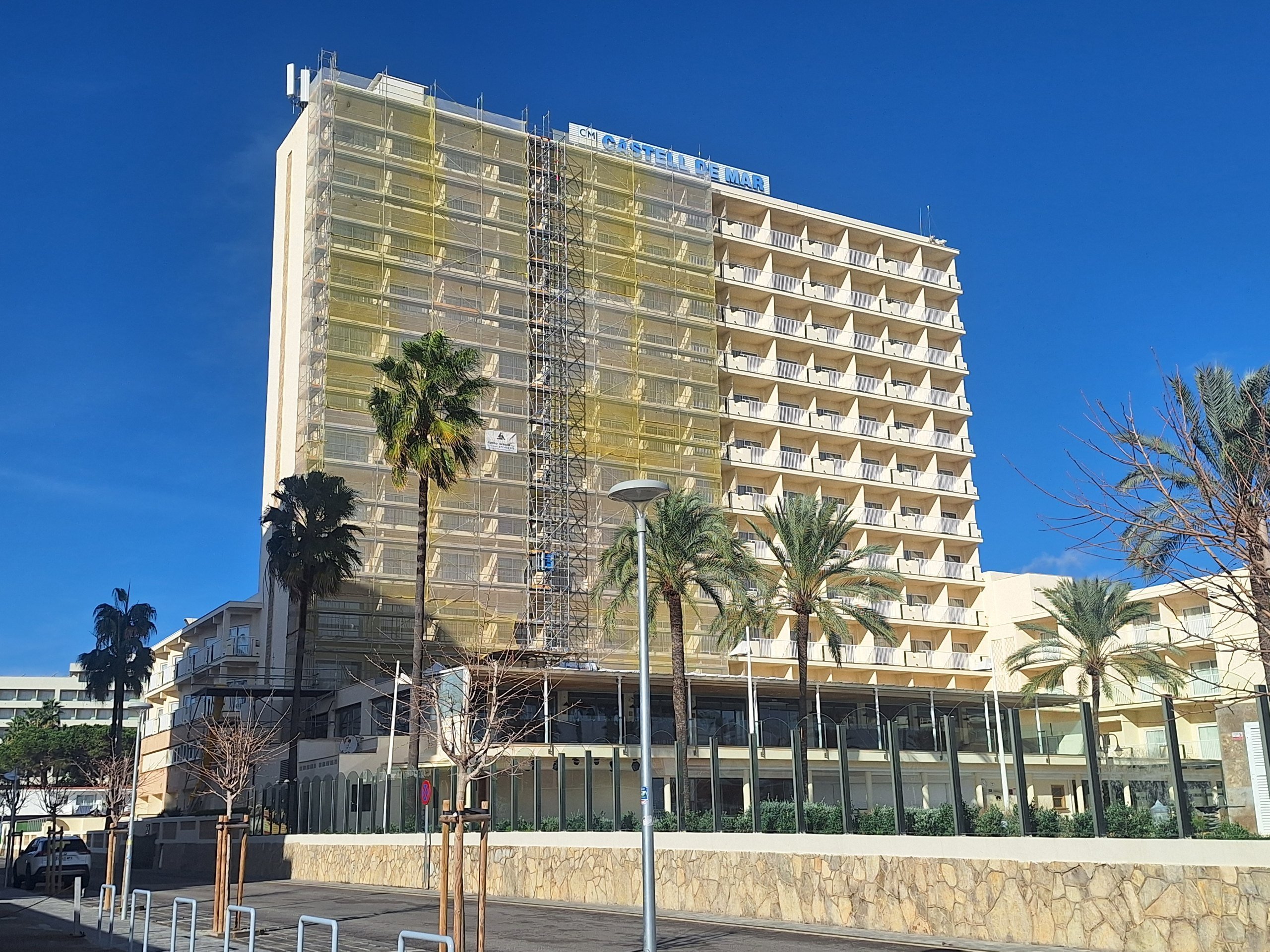
Cover photo: façade renovation of a seafront apartment building. Photo: Steffen Mokosch · CC BY-SA 4.0, via Wikimedia Commons.