Ephemeral architecture: building things that aren't meant to last (and what we learnt with Reflejo)
Almost everything we do as architects is meant to last: fifty years, a hundred if it is looked after. Ephemeral architecture turns that idea on its head. It is designed for a few days or weeks, built, lived in and then gone. And yet some of the most influential works in the history of architecture were, originally, buildings with an expiry date.
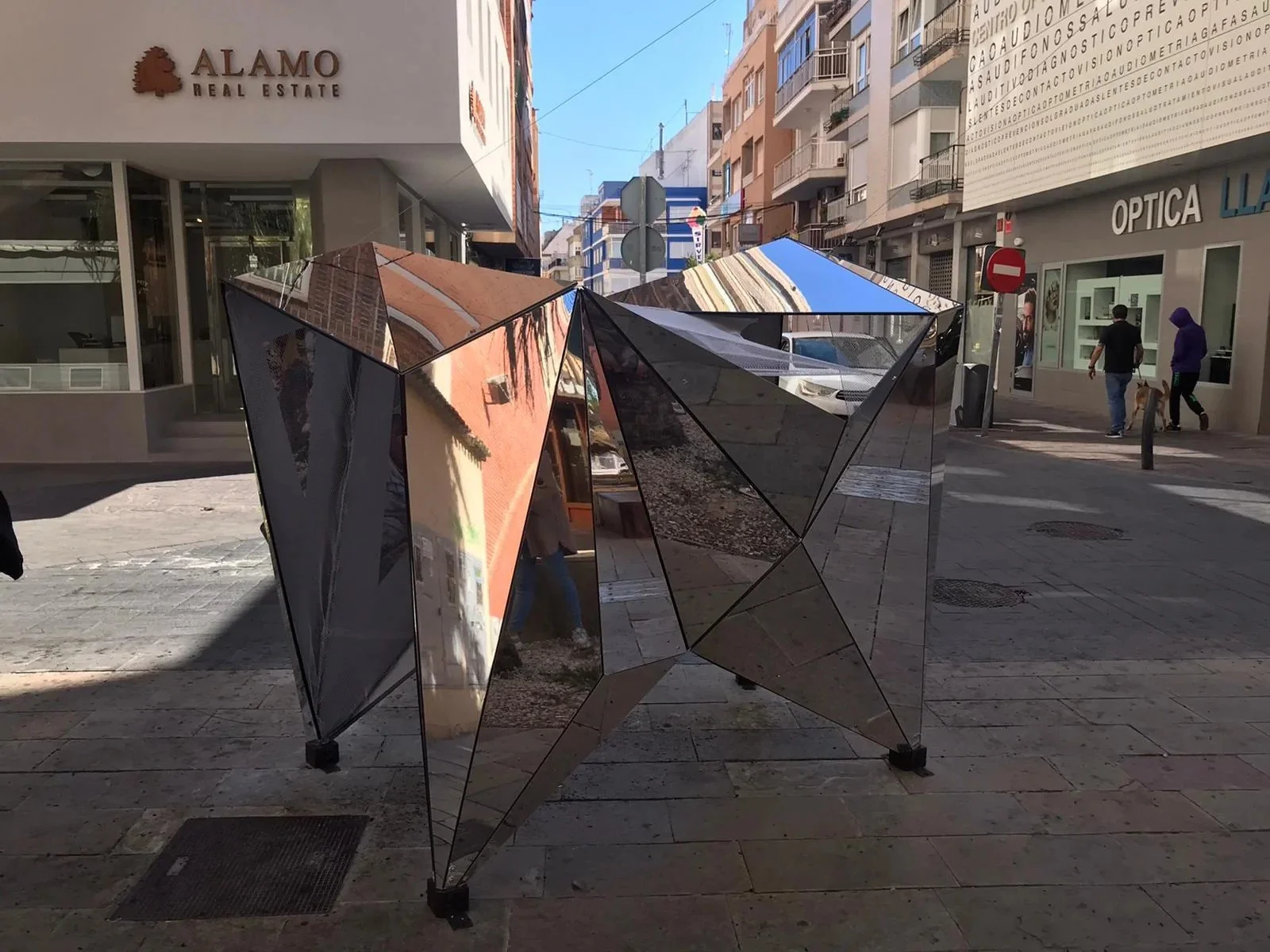
In 2020 we designed and built one of those pieces with our own hands: Reflejo, a mirror installation in a street in the centre of Torrevieja that won second prize in the Arquitectura Efímera 2020 competition. Here we explain what ephemeral architecture is, what some of its great examples teach us and what we learnt building our own.
What ephemeral architecture is
It is architecture born with a short life decided in advance: exhibition pavilions, urban installations, stage sets, festival monuments, emergency shelters. It is not “lesser” architecture. Because it does not have to withstand decades, it can afford what a building cannot: trying out a new material, a daring form or an idea that is not yet ready to be permanent.
That is why it works as a laboratory. What is tested in an ephemeral piece very often ends up in everyday buildings. Four examples explain it better than any definition.
The pavilion that lasted a year and changed the century
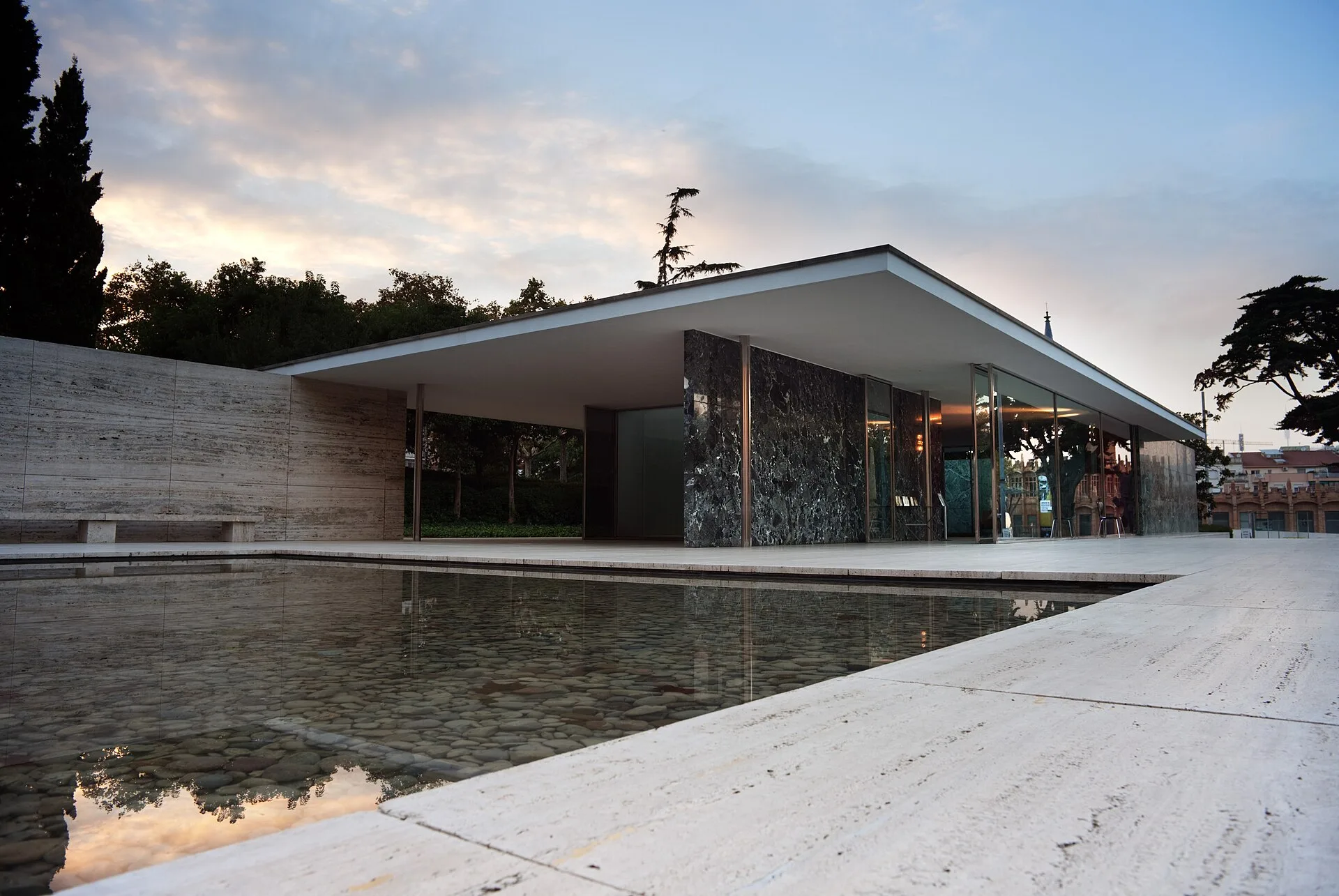
Mies van der Rohe built it for the 1929 Barcelona International Exposition and it was taken down the following year. It stood for a few months and, even so, became one of the most studied works of modern architecture: sliding planes, a roof that seems to float, marble, glass and water reflecting one another. Half a century later it was rebuilt on the same spot. Sometimes the ephemeral is what endures the longest.
A commission for a single summer
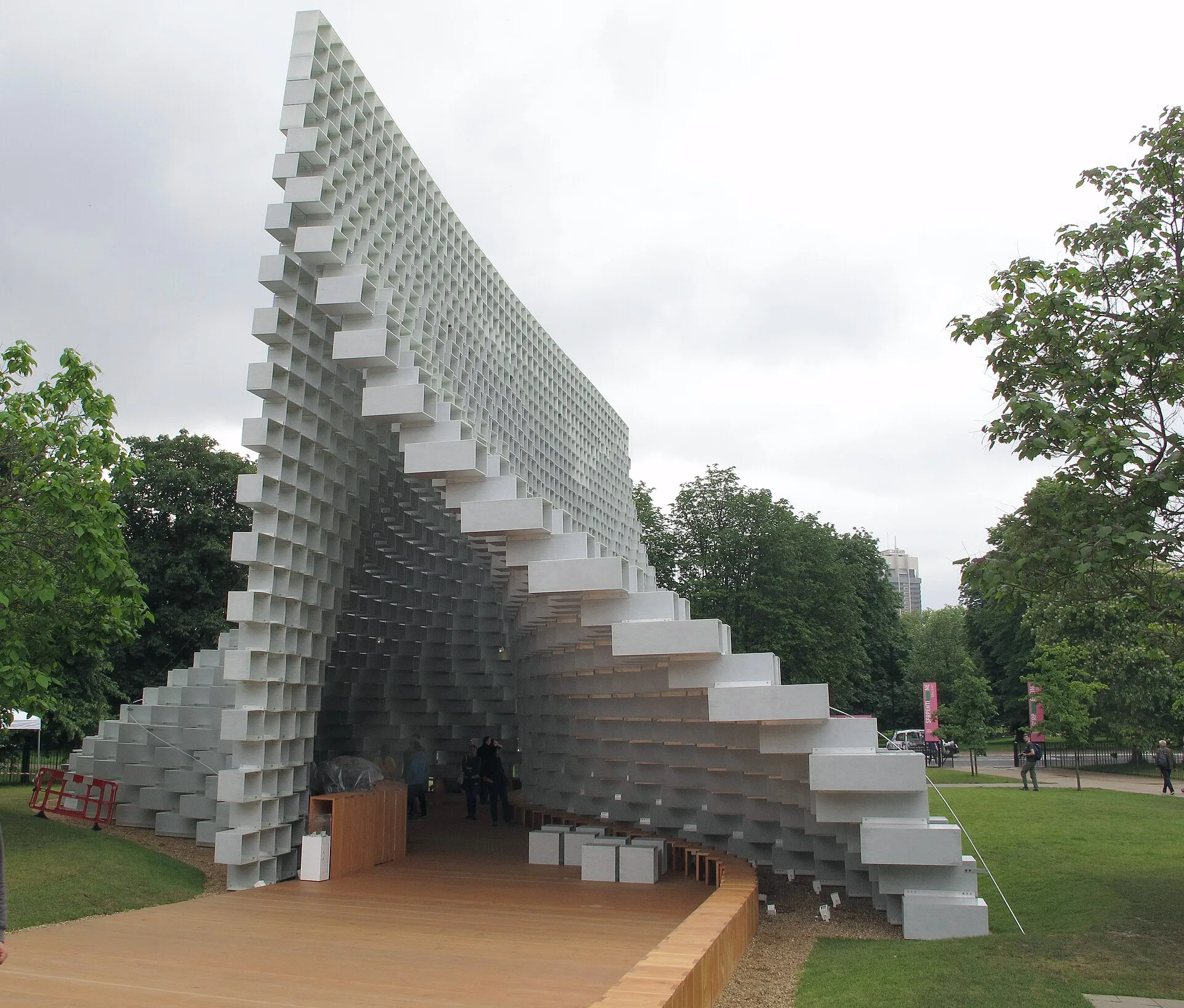
Since 2000, London's Serpentine Gallery has commissioned a temporary pavilion every summer from an architect who has not yet built in England. It goes up in June in Kensington Gardens and comes down in autumn. For many of those architects it has been the showcase where they could show the world a way of building.
Cardboard against the earthquake
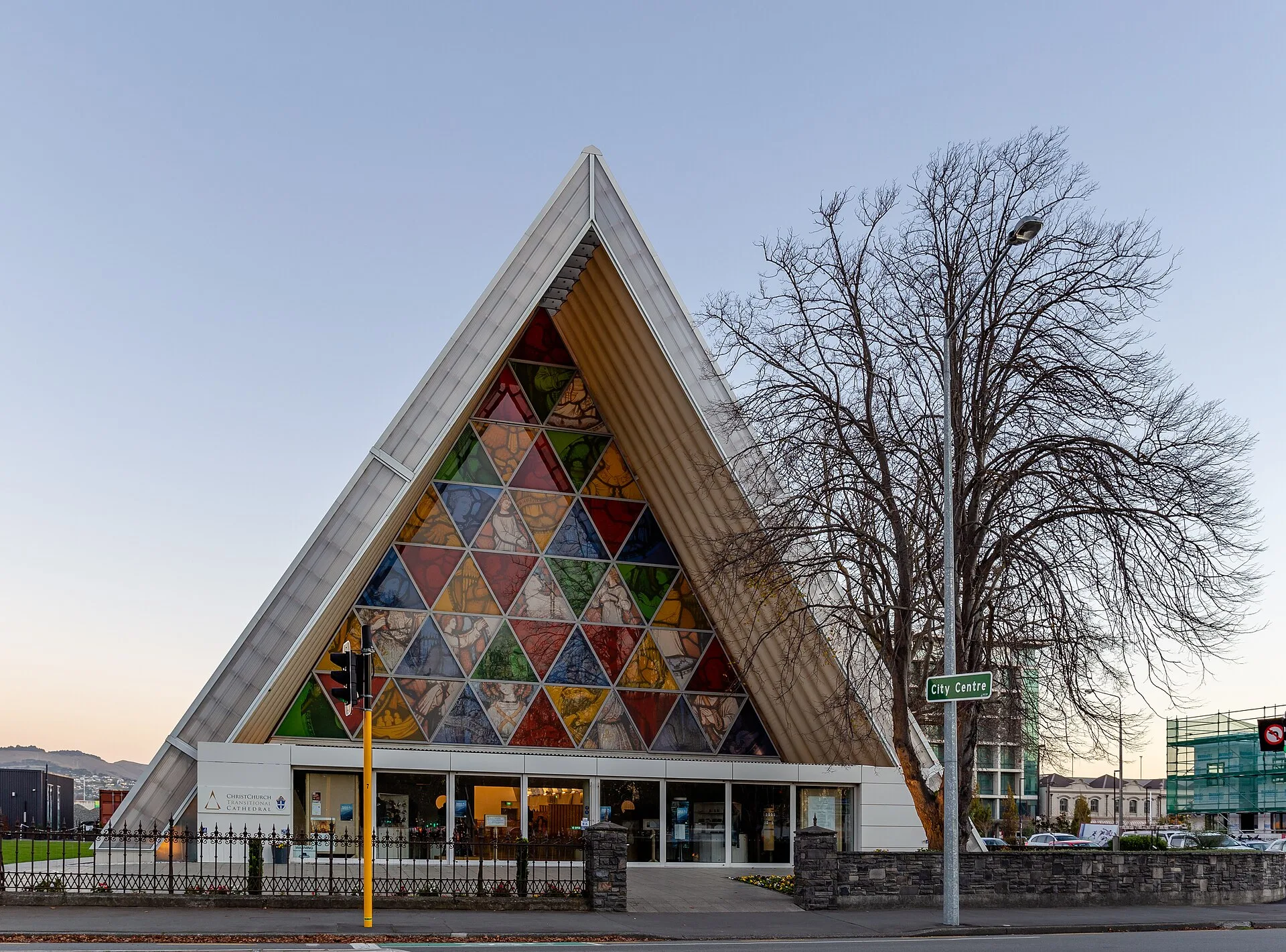
Shigeru Ban has been building with cardboard tubes for decades: shelters for displaced people, pavilions, churches. In Christchurch, after the earthquake that destroyed the cathedral, he built a temporary one in this material. His underlying idea is that what makes a building last is not the material, but people loving it and caring for it.
Our own tradition: monuments built to burn
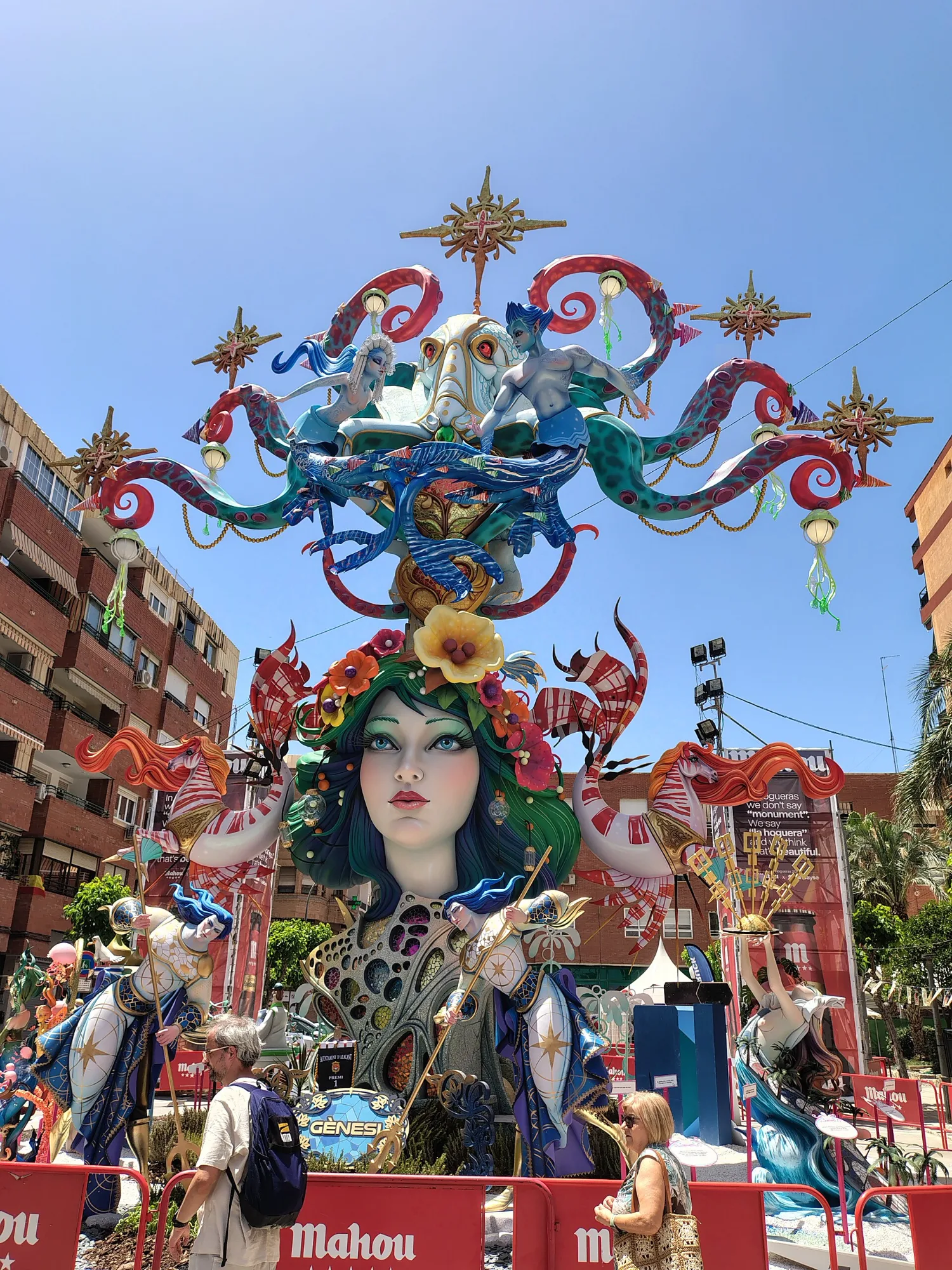
There is no need to go far. The Hogueras of Alicante and the Fallas of Valencia are ephemeral architecture in its purest form: monuments several storeys high that take a year to design, go up in a few days and burn in a single night. Behind each one there is structure, calculation and craft.
Reflejo: mirrors to look at poverty
Arquitectura Efímera 2020 was the seventh edition of an event organised by architect and lecturer Adriana Figueiras with students and young architects from the University of Alicante, together with the University Campus and Torrevieja Town Hall. That year, seven installations took over Calle Joaquín Chapaprieta and Plaza Waldo Calero from 3 to 31 October. Each one had to explain one of the United Nations Sustainable Development Goals.
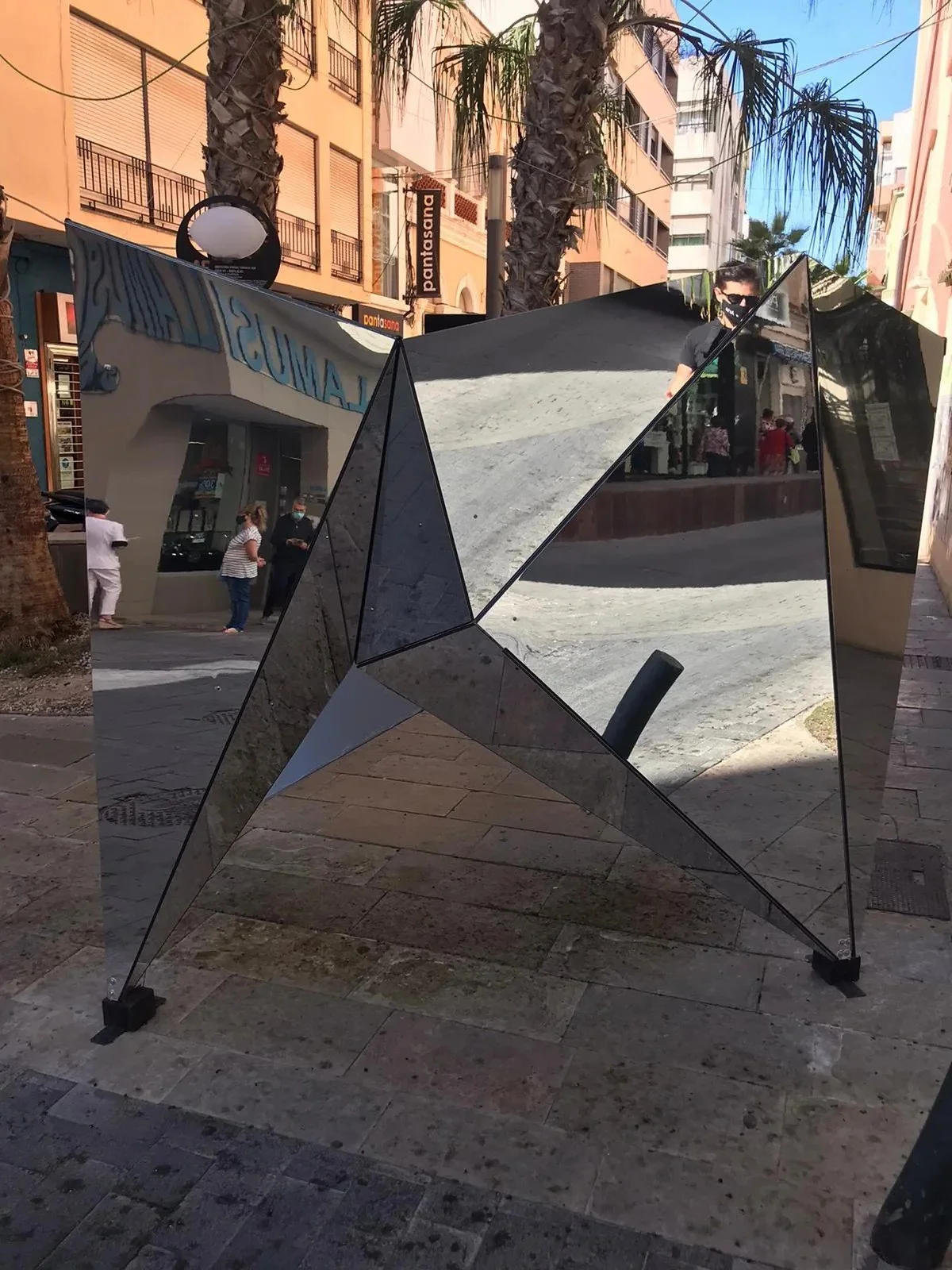
We were given the hardest one to show: SDG 1, no poverty. Poverty can't be seen from a shopping street, and that is exactly why we chose the mirror. From the outside, the installation reflects the city as it is: the façades, the shop windows, the palm trees, whoever walks by. Inside, behind the panels, there are real images and data on three faces of poverty in Torrevieja: housing, hunger and unemployment. To see one, you have to go through the other.
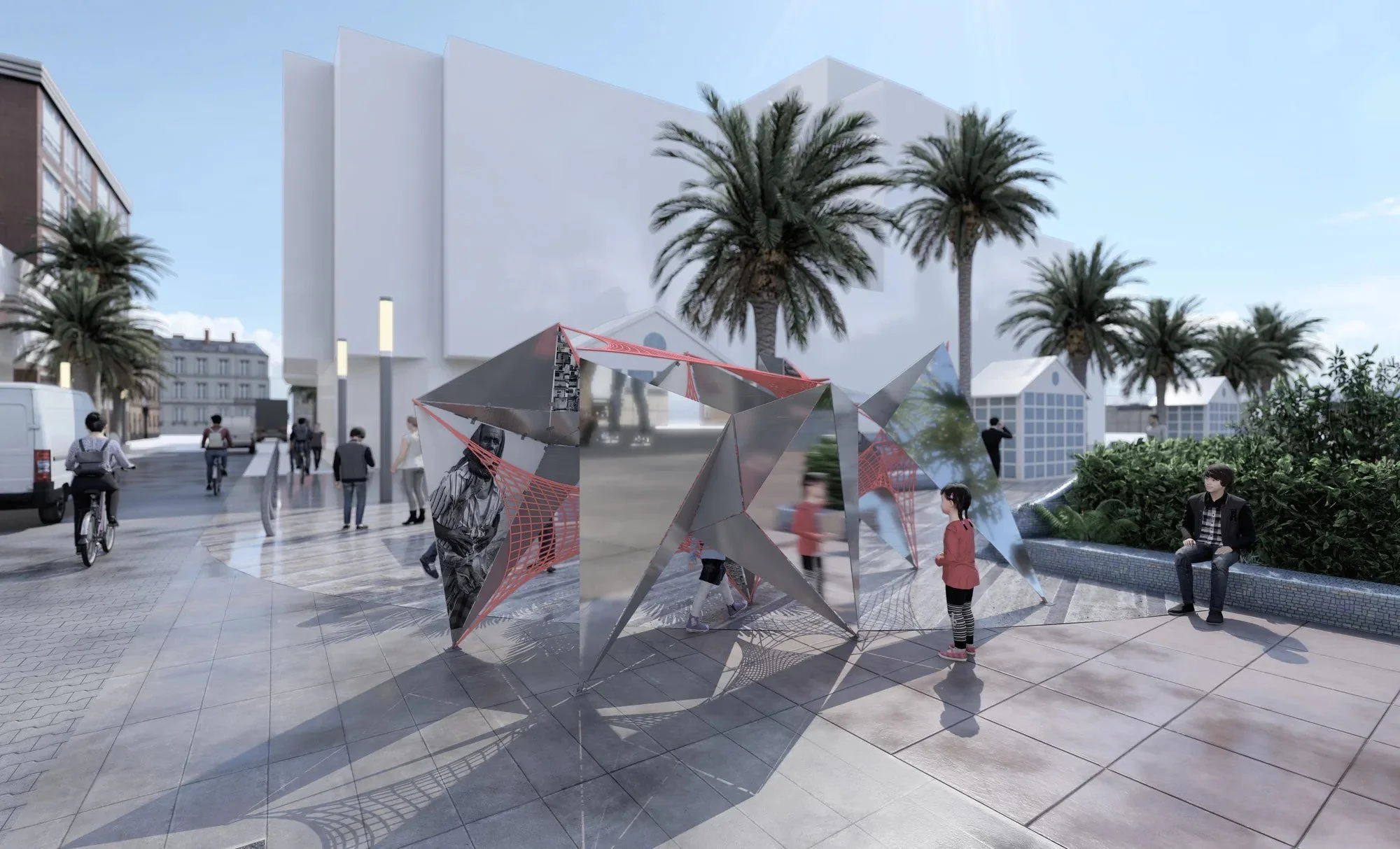
Every mirror, calculated
A mirror doesn't reflect “what is in front of it”: it reflects whatever lies in the direction symmetrical to the gaze of the person looking at it. So each panel was sized and tilted using sight-line drawings, in plan and in section, so that someone standing at a specific point in the street would see exactly what we wanted reflected: the crown of a palm tree, the sky, the fountain, other people. Those points were marked on the ground.
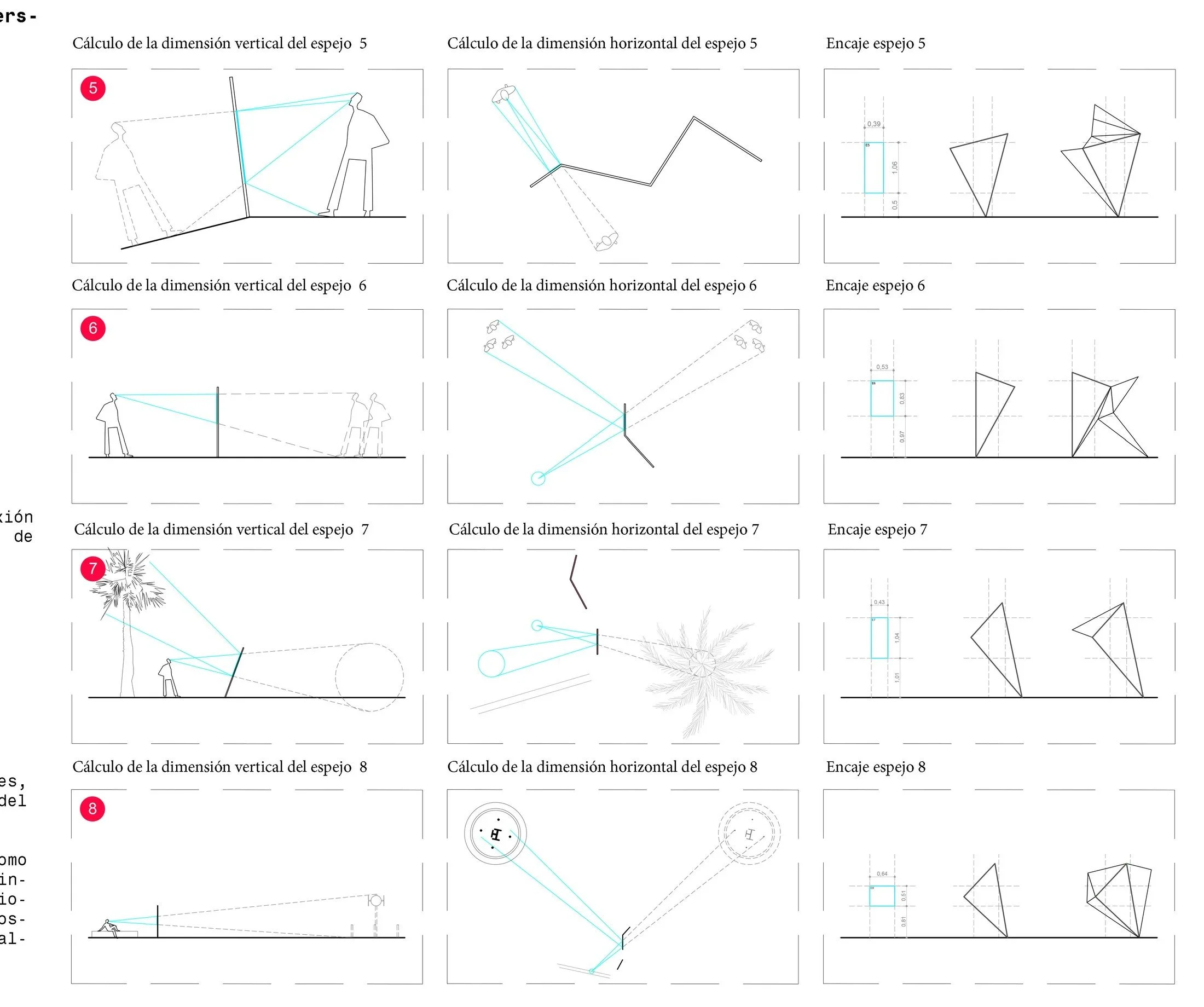
In a building, geometry responds to use. Here it responded to the gaze: the size of each mirror was decided by where the eye of a passer-by would be.
Building light: aluminium, angles and bolts
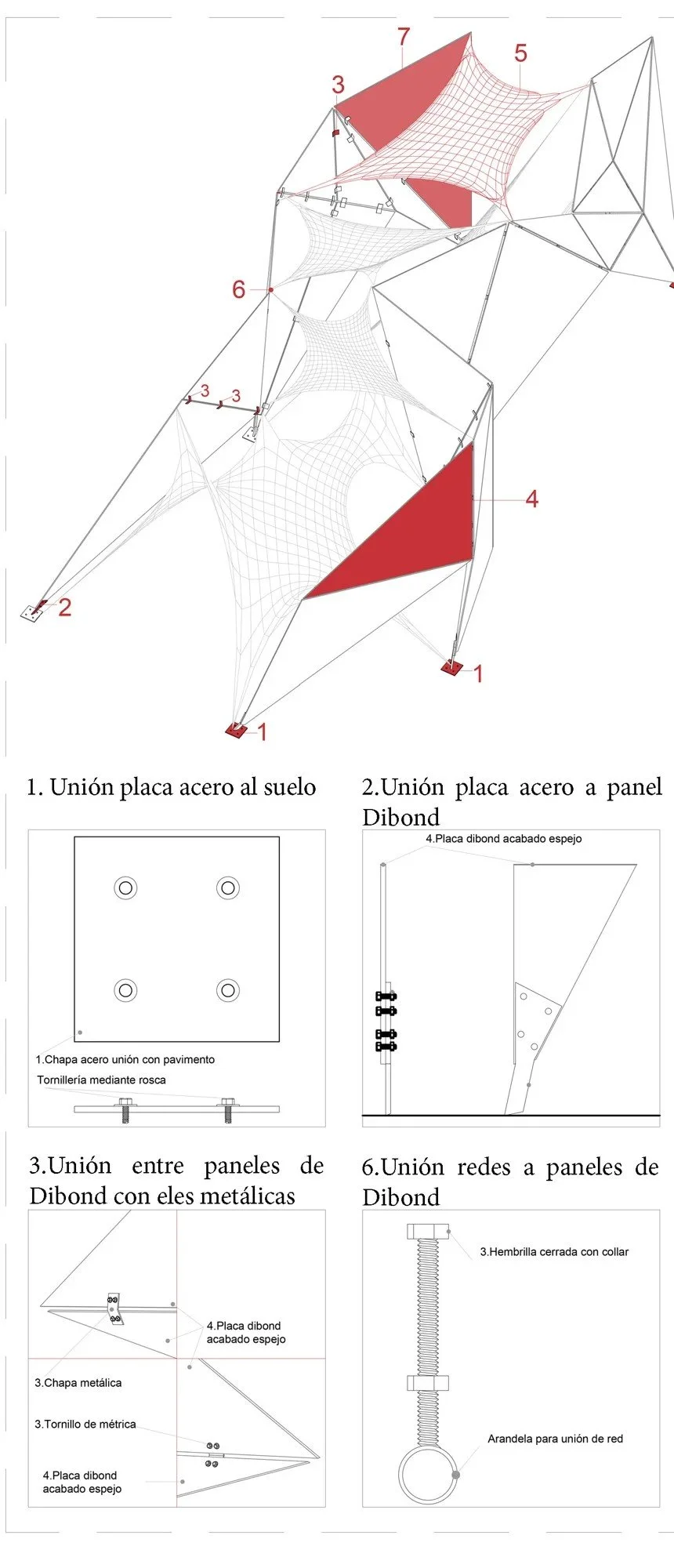
Ephemeral work makes you think the opposite way to a building site: everything has to be made in a workshop, loaded onto a lorry, put up in a morning and taken down without leaving a mark on the paving. The solution was a self-supporting skin of 6 mm aluminium composite panels with no separate structure: the panels themselves, folded against each other, are the structure.
| Element | Quantity | What for |
|---|---|---|
| Mirror-finish composite panels, 6 mm | 8 panels, about 5.7 m² | The reflecting faces |
| Aluminium composite panels, 6 mm | 18 panels, about 8.2 m² | The rest of the skin, which also acts as the structure |
| Steel sheet angles | 67 pieces and 268 metric bolts | Joining the panels along their edges |
| Steel base plates | 15 plates with 4 bolts each | Fixing the installation to the paving |
| Recycled fishing nets | About 10 m², donated | Stretched between the volumes in the design |
| Cost of materials | ≈ €1,240 |
Materials costing around €1,240 was no accident. It was a condition of the project, and the jury singled out precisely the material and the construction system. In ephemeral architecture, the budget is part of the design from the very first drawing.
From the workshop to the street
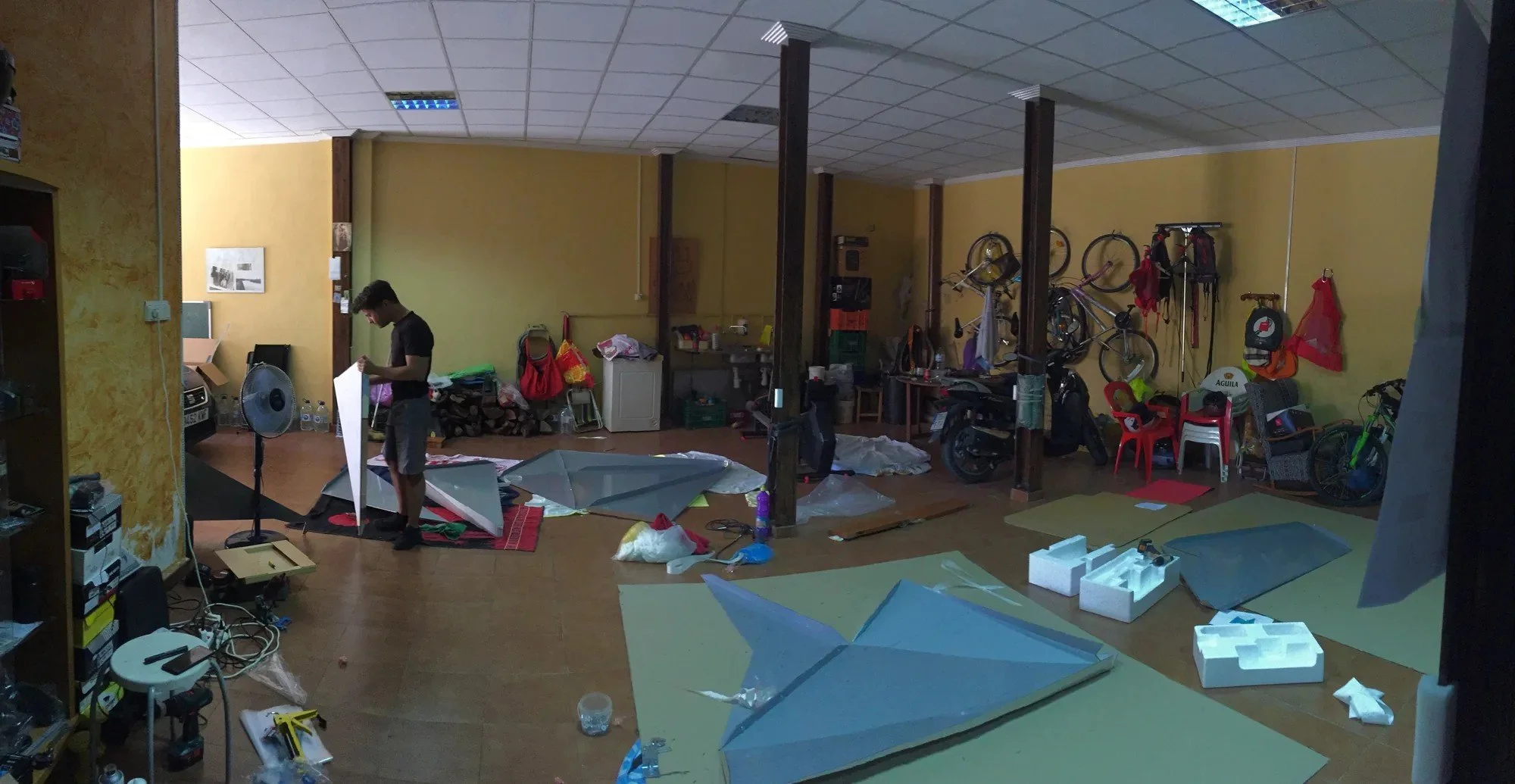
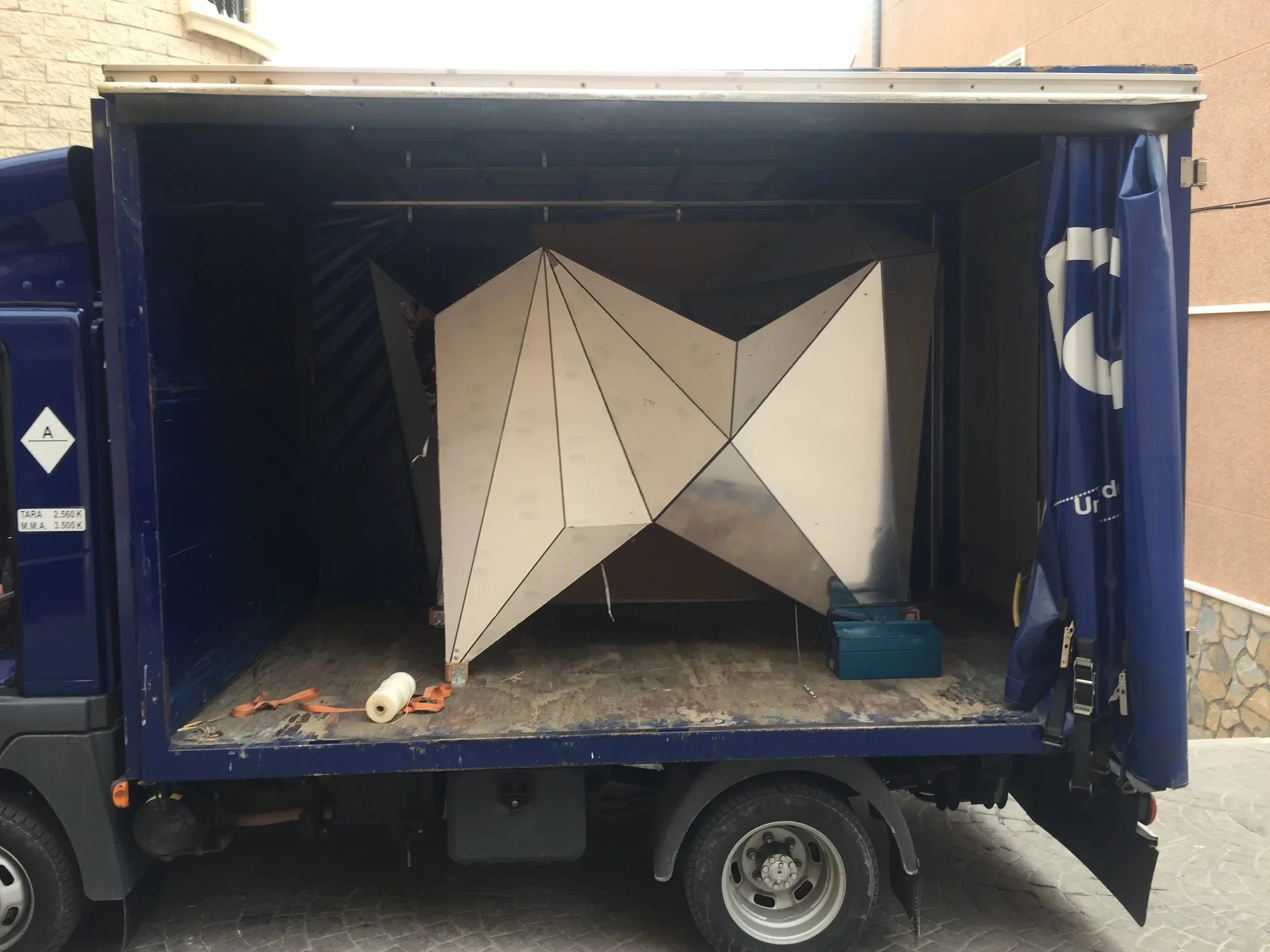
We cut and folded the panels in a workshop, over full-size templates drawn on the floor, and assembled the whole piece to check everything fitted before taking it to Torrevieja. Then it was loaded onto a lorry, volume by volume, and the final assembly was done in the street.
What happened in the street
For a month, the installation did what it was meant to do: people stopped, saw themselves, walked around the piece and went inside. The mirrors gave back a fragmented street, with the sky on the ground and the palm trees inside the shop windows. And inside, the other reflection was waiting – the one you don't see on a shopping street.
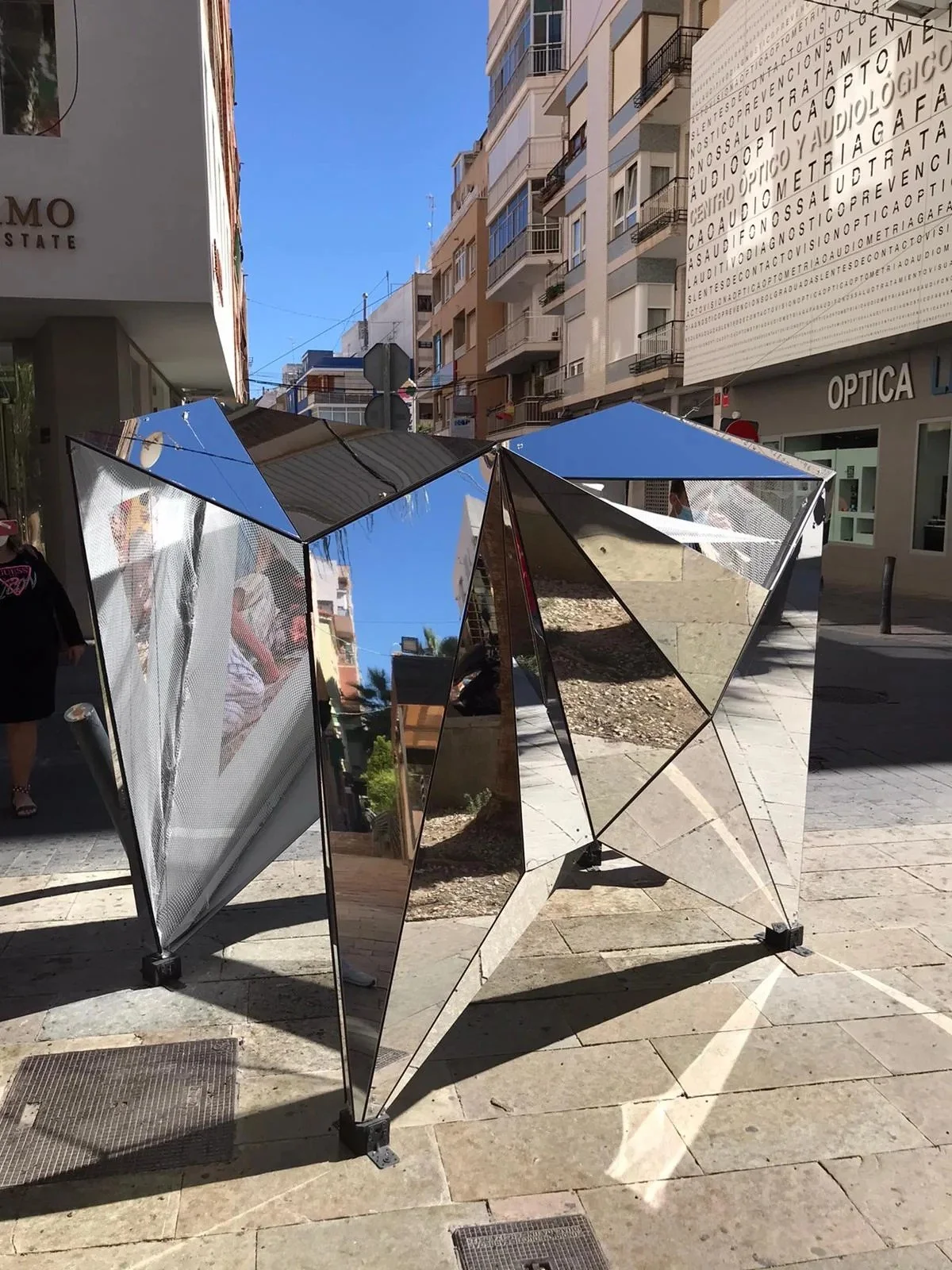
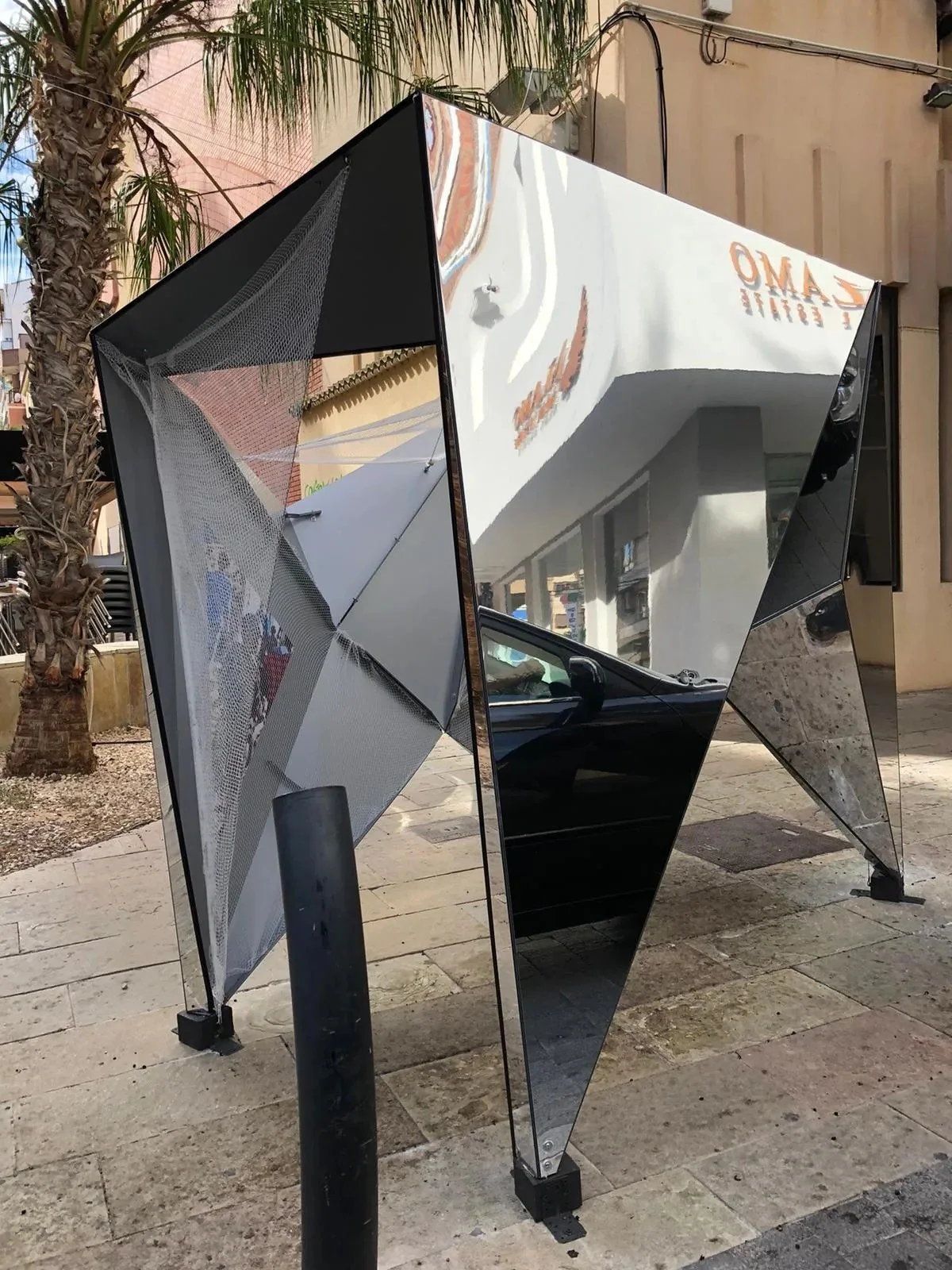
The competition jury awarded it second prize, for “the bold choice in the use of the material and its construction system, as well as its expressive formal success”. The 2020 edition of the event was later recognised in the EMPORIA National Ephemeral Architecture Awards.
What we bring to everyday architecture
Reflejo lasted a month, but what we learnt from it stays with us in every project:
- The detail is the project. In a lightweight piece there is nowhere to hide a bad joint. Every junction is drawn, tested and counted.
- Build before you build. Assembling it in full in the workshop saved us surprises in the street. The same goes for a building site: what you solve on paper or in a model is cheap; what you solve on site is not.
- The budget is one more material. Designing within a clear limit forces you to choose well, and usually gives better results than designing without one.
- Architecture communicates, too. A piece that lasts a month can make people think more than a fifty-year-old building. It is worth asking what the things we build are saying.
If you have an installation, a pavilion or a temporary intervention in a public space in mind, we'd love to talk it through. You can write to us.
Further reading
- El Periódic, «Otorgados los premios del Concurso de Arquitectura Efímera 2020 de Torrevieja», 15 October 2020.
- Escuela Politécnica Superior, University of Alicante, «Premios Nacionales de Arquitectura Efímera para actividad con estudiantes de la UA», 8 March 2022.
- Fundació Mies van der Rohe, history of the Barcelona Pavilion.
- Serpentine Galleries, annual summer pavilion programme.
Cover photo: Reflejo in a pedestrian street in central Torrevieja, October 2020. Photo: Unité Arquitectura.