Energy performance certificate: what it is, what it costs and which improvements raise your rating
It is probably the most requested and least understood technical document. Almost everyone orders one because the notary or the estate agent requires it, gets a letter and never thinks about it again. That's a shame, because done properly it says a lot about a home: how much energy it uses, where it loses it and what is worth improving.
What it is and when it's compulsory
The energy performance certificate (EPC) is regulated by Real Decreto 390/2021. It rates the property with a letter from A (most efficient) to G (least efficient), based on the energy it needs for heating, cooling and hot water, and the CO₂ emissions it produces.
- It is compulsory to sell or let a home or commercial premises, whether the whole building or part of it. It must be handed to the buyer or tenant.
- The label must appear in adverts: on the property portal, on the shop-window card or in any advertising.
- It is valid for 10 years, unless the rating is G, in which case it is valid for 5.
- It is signed by a qualified professional (architect, building engineer or qualified engineer) and registered with the regional authority. In the Valencian Community it is registered with IVACE, with a fee of about €10 per home.
Not having one, or not showing the label in the advert, can lead to fines ranging from a few hundred euros to several thousand.
The scale, from A to G
Indicative diagram. The exact letter depends on the climate zone and the type of building.
In homes built between the seventies and the two-thousands that haven't had energy upgrades, it's common to see ratings of E, F or G: little insulation, basic window frames and individual air-conditioning units. Not unusual for their time, but there is plenty of room for improvement.
How it's done
- Site visit: we measure the rooms, the windows and their orientation, and check how the walls, roof, floors and heating, cooling and hot water systems are built.
- Calculation with one of the programs approved by the Ministry. For existing homes we normally use CE3X.
- Improvement report: the certificate isn't just a letter; it includes recommendations to improve it and an estimate of the savings.
- Registration with IVACE and delivery of the signed label and certificate.
The mistake we see most
A certificate issued for the wrong cadastral reference. It happens more than you'd think, especially in buildings with many homes or houses with several references. We've had to redo certificates done by others for this reason, and the problem always shows up at the worst moment: at the notary's, on the day of signing. Before ordering one, check that the reference on the certificate matches the one on the deed and on the IBI (property tax) bill.
Which improvements raise your rating
A real case: a 2005 home rated E. The improvements we proposed in the certificate cut primary energy consumption by between 36 and 39%:
| Improvement | What it does | When it pays off |
|---|---|---|
| External wall insulation (SATE/ETICS) | Wraps the façade in insulation and eliminates thermal bridges. | If the façade has to be redone anyway, or in houses with a lot of exposed façade. |
| Windows | Thermally broken frames with low-emissivity double glazing. | Almost always: it's the improvement you notice most in comfort. |
| Roof insulation | Reduces the heat coming in through the roof or flat roof terrace in summer. | In top-floor flats and single-storey houses, where the roof is the biggest loss. |
| Heat pump (aerothermal) | Replaces boilers or electric water heaters with much more efficient equipment. | When the hot water or air-conditioning system is due for replacement. |
| Solar panels | Produce part of the electricity the house uses. | In detached houses with a good orientation. |
In our climate, it's best to start with whatever reduces summer heat and losses through the windows, which is where most energy goes.
A tax break worth knowing about
Works that improve the energy efficiency of your main home or a rented home qualify for income tax (IRPF) deductions: 20% or 40% on your home, depending on how much demand or consumption is reduced, and 60% when the works cover the whole building. Under the latest extension, approved in March 2026, they apply to works on homes until 31 December 2026. To prove it you need one energy performance certificate before the works and another after. If you're thinking of replacing the windows or insulating, get the first one done before you start.
How much it costs
Fees are deregulated and depend on size, complexity and travel. As a reference, these are the indicative amounts from the cost study by the Instituto Valenciano de la Edificación (IVE), which calculates the hours for the site visit, data collection and calculation by type of property:
| Property | Energy performance certificate (EPC) |
|---|---|
| Flat in a building | €120 – €200 |
| Detached house | €400 – €500 |
| Whole building | from around €500 (small blocks) to €1,200 or more |
It works out cheaper if it is done alongside another job on the same visit, such as a second occupancy or a drawing for the Cadastre. A building with different uses (a home above a commercial unit, for example) needs separate certificates and more work. And if your owners' association also has to do the IEE, doing both at once is around 10–15% cheaper.
In short
- It is compulsory for selling or renting, and the label must appear in the listing.
- It is valid for 10 years (5 if the rating is G) and is registered with IVACE.
- Check that the cadastral reference is correct.
- Read it: the improvements it suggests are a good roadmap, and some are tax-deductible.
If you need a certificate in the Vega Baja, Elche, Alicante or the Vinalopó, write to us from the contact page with the cadastral reference. More information at energy performance certificate.
Further reading
- Real Decreto 390/2021, of 1 June, approving the basic procedure for certifying the energy efficiency of buildings.
- IVACE, register of energy performance certificates of the Valencian Community.
- Ley 35/2006 on personal income tax (IRPF), fiftieth additional provision (deductions for works improving energy efficiency), as currently worded.
- Instituto Valenciano de la Edificación (IVE), study of the costs of preparing the IEE.CV and the EPC.
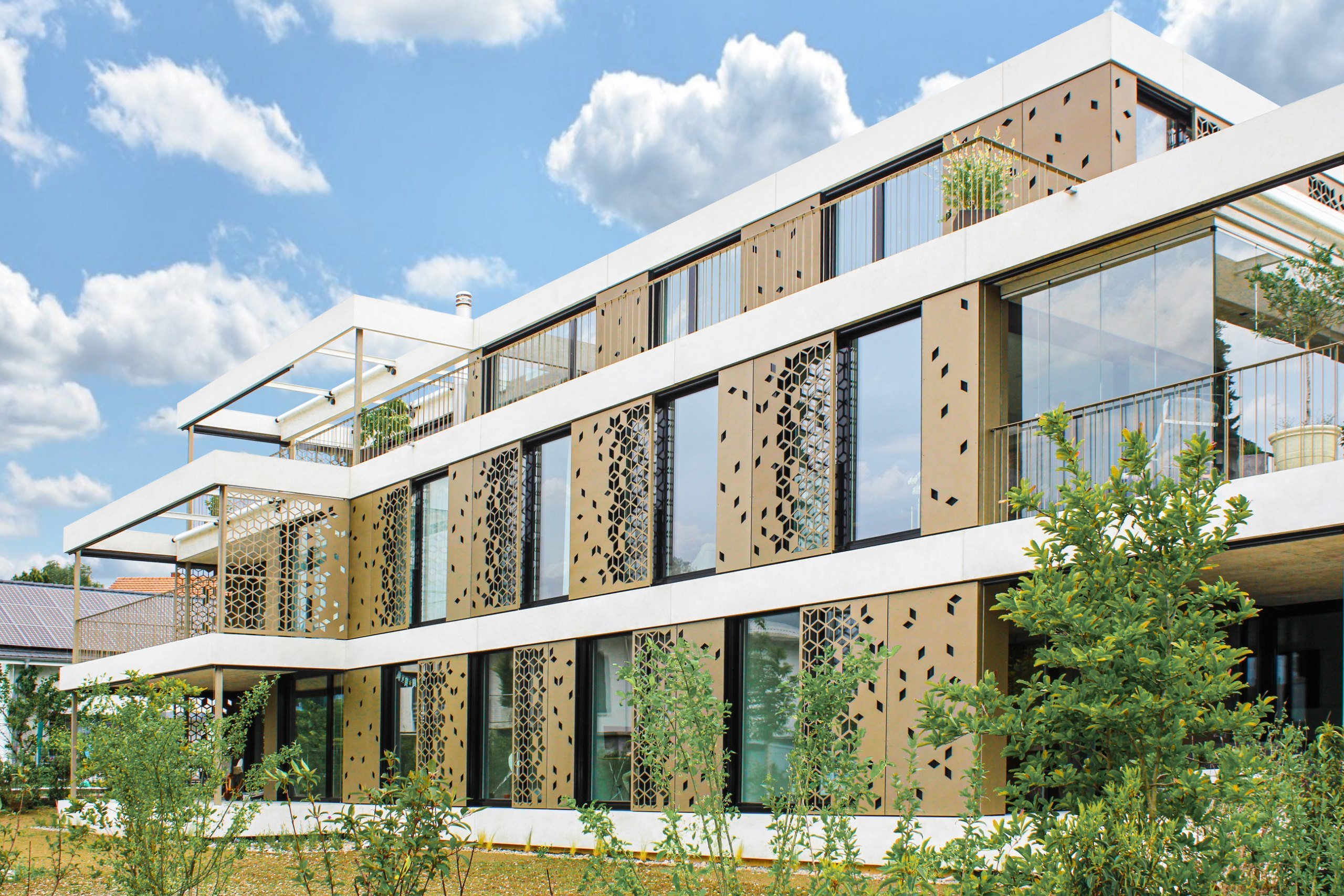
Cover photo: façade with a perforated lattice that filters the sun. Photo: Nina Züllig · CC BY 4.0, via Wikimedia Commons.